

In the plastic film manufacturing industry, ensuring the uniform thickness of plastic films is of utmost importance. A plastic film thickness gauge is a crucial tool used to measure the thickness of plastic films accurately. However, a common question arises: Can a plastic film thickness gauge measure the thickness of plastic films with internal defects? As a leading supplier of plastic film thickness gauges, I will delve into this topic to provide you with a comprehensive understanding.
How Plastic Film Thickness Gauges Work
Before discussing the measurement of plastic films with internal defects, it is essential to understand how plastic film thickness gauges operate. There are several types of thickness gauges available in the market, including mechanical, ultrasonic, and optical gauges.
Mechanical gauges work by physically contacting the plastic film surface. They typically consist of a probe that applies a specific force to the film, and the displacement of the probe is measured to determine the film thickness. These gauges are relatively simple and cost - effective but may have limitations in measuring films with irregular surfaces or internal defects.
Ultrasonic thickness gauges use high - frequency sound waves to measure the thickness of the plastic film. The gauge sends an ultrasonic pulse into the film, and the time it takes for the pulse to bounce back from the opposite surface is measured. Based on the speed of sound in the plastic material, the thickness of the film can be calculated. Ultrasonic gauges are non - destructive and can measure films with varying degrees of transparency.
Optical thickness gauges rely on the principles of light reflection and refraction. They emit a light beam onto the plastic film, and the reflected light is analyzed to determine the film thickness. Optical gauges are highly accurate and can measure very thin films with high precision.
Impact of Internal Defects on Thickness Measurement
Internal defects in plastic films, such as voids, inclusions, or uneven distribution of additives, can significantly affect the accuracy of thickness measurement.
When using a mechanical gauge, internal defects can cause the probe to encounter uneven resistance. For example, if there is a void in the film, the probe may sink deeper into the void area, leading to an inaccurate measurement of the film thickness. The measured value may be lower than the actual average thickness of the film.
In the case of ultrasonic gauges, internal defects can disrupt the propagation of ultrasonic waves. Voids or inclusions can cause the ultrasonic waves to scatter or reflect prematurely, resulting in incorrect time - of - flight measurements. This can lead to either an overestimation or underestimation of the film thickness, depending on the nature and location of the defect.
Optical gauges are also affected by internal defects. If there are inclusions or color variations within the film due to additives, the light reflection and refraction patterns can be altered. This can lead to inaccurate thickness measurements, especially when the gauge is calibrated based on the assumption of a homogeneous film.
Detection and Compensation for Internal Defects
Despite the challenges posed by internal defects, modern plastic film thickness gauges are equipped with advanced technologies to detect and compensate for these issues.
Some ultrasonic gauges are designed with multiple frequencies and advanced signal processing algorithms. By using different frequencies, the gauge can penetrate the film to different depths and detect internal defects. The signal processing algorithms can then analyze the received signals to distinguish between normal and defective areas, allowing for more accurate thickness measurement.

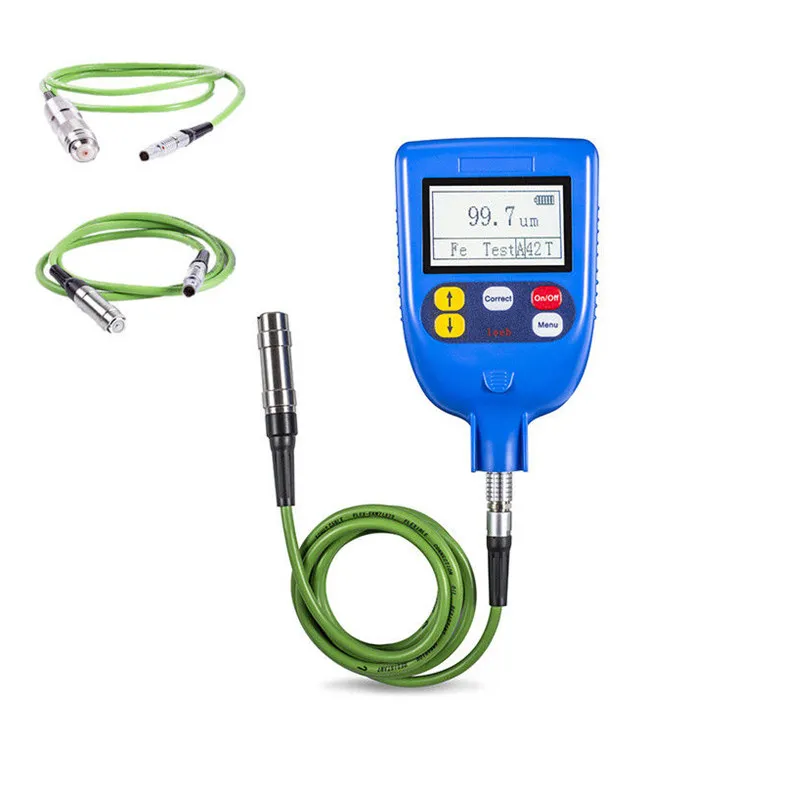
Optical gauges can be combined with imaging technologies to detect internal defects. For example, a gauge may use a high - resolution camera to capture an image of the film surface and internal structure. By analyzing the image, the gauge can identify areas with defects and adjust the thickness measurement accordingly.
In addition, some thickness gauges can be calibrated based on the known properties of the plastic material and the expected types of internal defects. This calibration process can help improve the accuracy of the measurement, even in the presence of defects.
Case Studies
To illustrate the practical application of plastic film thickness gauges in measuring films with internal defects, let's consider a few case studies.
A plastic film manufacturer was producing packaging films with a target thickness of 50 micrometers. During the production process, they suspected that some of the films had internal voids due to improper extrusion. They used an ultrasonic thickness gauge with advanced signal processing capabilities to measure the films. The gauge was able to detect the voids and provide accurate thickness measurements by compensating for the presence of these defects. This allowed the manufacturer to identify and reject defective films, ensuring the quality of their products.
Another example involves a company producing optical plastic films. They used an optical thickness gauge combined with an imaging system to measure the thickness of their films. The imaging system detected inclusions within the film, and the gauge was able to adjust the thickness measurement based on the analysis of the inclusion area. This helped the company maintain the high - quality standards required for their optical products.
Importance of Accurate Thickness Measurement in the Presence of Defects
Accurate thickness measurement of plastic films with internal defects is crucial for several reasons.
In the packaging industry, the thickness of plastic films directly affects the barrier properties of the packaging. If the film has internal defects and the thickness is not measured accurately, the packaging may not provide adequate protection for the product inside. This can lead to spoilage, contamination, or damage to the product during storage and transportation.
In the electronics industry, plastic films are used as insulation materials. Any inaccuracies in thickness measurement due to internal defects can affect the electrical properties of the film, such as dielectric constant and breakdown voltage. This can lead to malfunctions or failures of electronic devices.
Our Company's Solutions
As a supplier of plastic film thickness gauges, we offer a wide range of products that are designed to address the challenges of measuring plastic films with internal defects. Our ultrasonic thickness gauges are equipped with advanced signal processing technology, which can detect and compensate for internal defects. Our optical gauges are combined with high - resolution imaging systems to provide accurate thickness measurements even in the presence of inclusions or color variations.
We also provide comprehensive calibration and training services to ensure that our customers can use our gauges effectively. Our team of experts is always available to provide technical support and advice on thickness measurement in different applications.
If you are interested in learning more about our plastic film thickness gauges or need assistance with measuring plastic films with internal defects, please feel free to contact us for a consultation. We are committed to helping you achieve accurate and reliable thickness measurement in your plastic film production process.
Related Products
For those who are also interested in other types of thickness measurement, we would like to introduce some related products. You can learn more about Dry Film Thickness Measurement, Color Screen Painting Thickness Meter, and Paint Coating Thickness Gauge. These products are also designed to provide accurate thickness measurement in different industries.
Conclusion
In conclusion, while internal defects in plastic films pose challenges to thickness measurement, modern plastic film thickness gauges are capable of measuring the thickness of such films with a reasonable degree of accuracy. Through advanced technologies such as signal processing, imaging, and calibration, these gauges can detect and compensate for the presence of defects. As a supplier, we are dedicated to providing high - quality thickness gauges and comprehensive solutions to meet the needs of our customers in the plastic film industry. If you are in the market for a plastic film thickness gauge or need to improve your thickness measurement process, we encourage you to contact us for further discussion and potential procurement.
References
- "Handbook of Plastic Film Technology" by Norman C. Lee
- "Non - Destructive Testing of Polymers" by John W. S. Hearle
- "Thickness Measurement Techniques in the Plastics Industry" - Journal of Plastic Engineering