


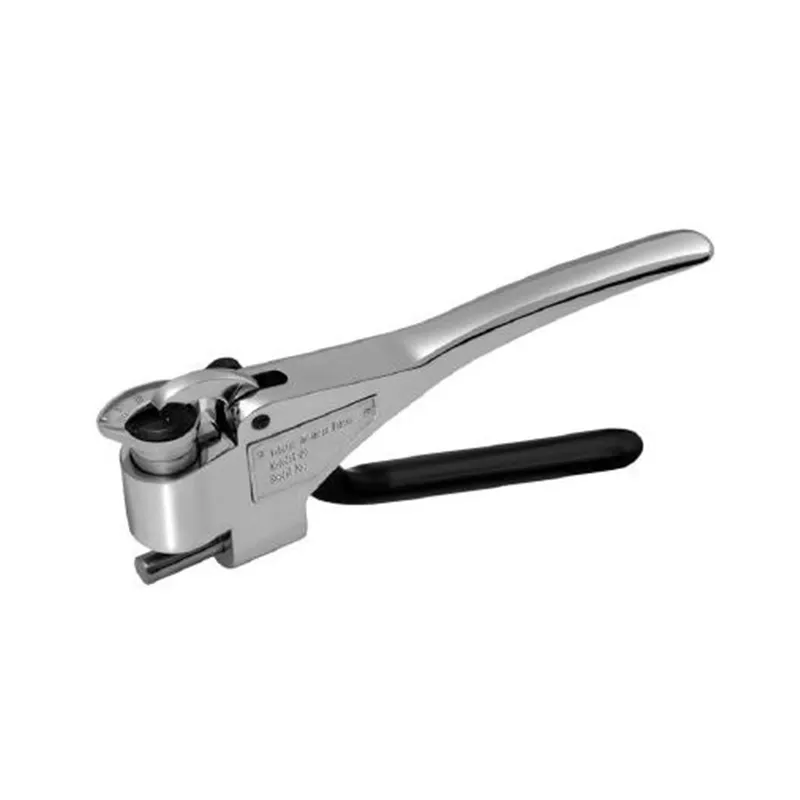
This Webster Hardness Tester is for quickly test the hardness of aluminum alloy.
Accordance with standards: ASTM B647-84 (2000), non-ferrous YS/T420-2000.
Easy test of long, heavy...
Webster Hardness Tester
Your Professional Webster Hardness Tester Supplier
Chongqing Leeb lnstrument Co.Ltd, located at High-tech industrial Development Zone of Chongqing, China. We specialize in manufacturing, researching and sale of NDT and Precision Testing Instruments over twenty years, including various kinds of Hardness Tester, Microscope, Surface testing device, Ultrasonic equipment and online Automatic testing systems.
-
![Common Aluminum Webster Hardness Tester]()
-
![Thin Aluminum Webster Hardness Tester]() Thin Aluminum Webster Hardness TesterModel: W-20A/20B/B75/BB75/B92read more
Thin Aluminum Webster Hardness TesterModel: W-20A/20B/B75/BB75/B92read more
Testing Range: 0~20HW (25~110HRE)
Testing Material: Brass
Testing Accuracy: 0.5HW
Indication Error: 0.5HW (5~17HW)

Why Choose Us
Certifications
We are a professional factory certified to ISO 9001 standards. Our products are tested using high-quality equipment and meet CE, FCC, and RoHS certification requirements.
Sales Market
In addition to meeting the needs of customers in mainland China, our products are also exported to advanced manufacturing countries such as Israel, the United States, Canada, Germany, France, Italy, Spain, and South Korea.
Our Services
We offer fast shipping with delivery in just 7 business days. All products come with a warranty of one to three years.We also provide free technical support and training.
Webster Hardness Tester
The Webster hardness tester is an important tool for measuring the hardness of metals. It is widely used in hardness testing in industrial production and metal processing due to its accurate measurement method and convenient operation. Hardness measurement is a key link in quality control, because the hardness of metal materials not only reflects their strength and wear resistance, but also directly affects processing performance and service life.
Technical Parameters
|
Model |
W-20 |
|
Testing Range |
0~20HW (25~110HRE) |
|
Testing Material |
Aluminum |
|
Testing Work-piece |
Thickness Range 0.4-6mm; Inside Diameter >10mm |
|
Testing Accuracy |
0.5HW |
|
Indication Error |
0.5HW (5~17HW) |
|
Standard |
ASTM B648-2000, ASTM B647-10, YS/T420-2000 |
|
Net Weight |
0.5 kg |
Standard Delivery
|
Name |
Quantity |
Name |
Quantity |
|
Harness tester |
1 |
Calibration wrench |
1 |
|
Webster hardness block |
1 |
Box |
1 |
|
Spare indenter |
1 |
Manual |
1 |
|
Small screwdriver |
1 |
Qualified Certificate |
1 |
Features
1. Widely used in a wide range of metal materials inspection.
2. Digital display to avoid mistakes caused by naked eyes observation of dials
3. Data can auto-lock, no need to keep pressing for readings
4. 6 hardness scales can convert freely, no need for manual checking the table
5. Directly press to complete calibration, easier than traditional Webster hardness testers.
6. Accuracy up to ±0.5HWA, guaranteed to pass the authoritative metrology institute inspection
7. Complimentary cell phone APP, support mass storage, data grouping and sharing
Advantages
Indenter: Re-engineerred with advanced material and new production technology manufactured, higher hardness, long service life, good interchangeability;
Indicator Hand: High strength indicator hand, less likely to be bent by long-term using or mis-operation;
Dial Glass: High strength, high toughness, uneasy to be broken or scratched;
Handle: Forged aluminum alloy handle with fine anodized finishing, high resistance to abraision and stain;
Hardness Blocks
Tested by standard Rockwell hardness tester, attached with test report;
Good Stability
Stable full scale point, stable calibration point, indicator never glides;
Easy Conversion
Results can be converted to Vickers, Rockwell and Brinell.
How does a Webster hardness tester work?
The work principle of the Webster hardness tester is to press a steel indenter of a specified shape into the surface of the sample under a certain test force, and use the depth of the indenter to indicate the hardness of the material. The indentation depth of 0.0125mm (generally directly approximated to 0.01mm in actual use) is defined as a Webster hardness unit, represented by HW. The hardness of the material is inversely proportional to the indentation depth. The shallower the indentation, the higher the hardness, and vice versa.
Calculation formula: HW=20-L/0.0125
In the formula, "HW" represents the Webster hardness symbol, "L" represents the depth of the indenter into the sample, in millimeters (mm), and "0.0125" is the specified value.
Based on the Webster hardness measurement principle detection, the Linshang digital Webster hardness tester adopts the eddy current induction principle measurement technology to measure the distance between the indenter and the coil, thereby inversely calculating the depth of the indenter into the material being tested. Eddy current technology can sensitively capture tiny physical changes through electromagnetic induction, and has higher repeatability and test accuracy.
Optional Webster Hardness Tester
01/
W-20 is used to test common aluminum profiles and pipes.
02/
W-20a is for testing the hardness of aluminum profile with the thickness < 13mm.
03/
W-20b thin pipe type is suitable for testing thin pipes with the inside diameter > 6mm.
04/
W-B75 is designed for testing the hardness of brass material.
05/
W-BB75 red copper type is applicable for red copper materials.
06/
W-B92 soft steel type is used to test stainless steel sheets and cold-rolled steel sheets.
Integrated handheld design, compact and portable
It is a small portable instrument, light in weight, and can be operated with one hand, especially suitable for rapid, non-destructive qualification checking of product hardness at the production site, sales site or construction site.
Comfortable grip
The body of the instrument is made of forged aluminium alloy material with anodic oxidation treatment, comfortable to hold, wear and pollution resistant.
Providing standard hardness block
Providing standard Webster hardness block, in strict accordance with the metrological verification procedures for the degree, and its surface roughness and flatness in line with the requirements of the regulations.
Main Application
1) Die cavity of molds
2) Bearings and other parts
3) Failure analysis of pressure vessel, steam generator and other equipment
4) Heavy work piece
5) The installed machinery and permanently assembled parts.
6) Testing surface of a small hollow space
7) Material identification in the warehouse of metallic materials
8) Rapid testing in large range and multi-measuring areas for large-scale work piece

What are the precautions for using a Webster hardness tester?
a. Try to use as little air pressure as possible on the instrument to avoid damaging the indenter too quickly, which will affect the stability of the instrument and the accuracy of the data.
b. The surface of the sample should be clean. Surface dirt or coating will affect the measurement accuracy.
c. When measuring, the distance between any two indentations should not be less than 6mm, and the distance between the center of the indentation and the edge of the object being measured should not be less than 5mm.
d. When measuring, you need to press it hard to the bottom at one time. Do not press it slowly.
e. The measurement accuracy will be reduced for hardness below 4HWA or above 17HWA.
Certifications


FAQ
As one of the most professional webster hardness tester manufacturers and suppliers in China, we're featured by quality products and good price. Please rest assured to buy discount webster hardness tester in stock here from our factory. Contact us for customized service.