

Hey there! As a supplier of Webster hardness testers, I often get asked all sorts of questions about what these nifty tools can and can't do. One question that pops up quite a bit is, "Can a Webster hardness tester measure the hardness of wood?" Well, let's dive right in and find out.
First off, let me give you a quick rundown of what a Webster hardness tester is. It's a portable, hand - held device that's super convenient for on - the - spot hardness testing. It's been around for a while and is widely used in various industries, especially those dealing with metals.
The way a Webster hardness tester works is based on the principle of indentation. You press the tester onto the material's surface, and it measures the depth of the indentation made by a calibrated indenter. The result is then shown on a scale, which gives you an idea of the material's hardness.
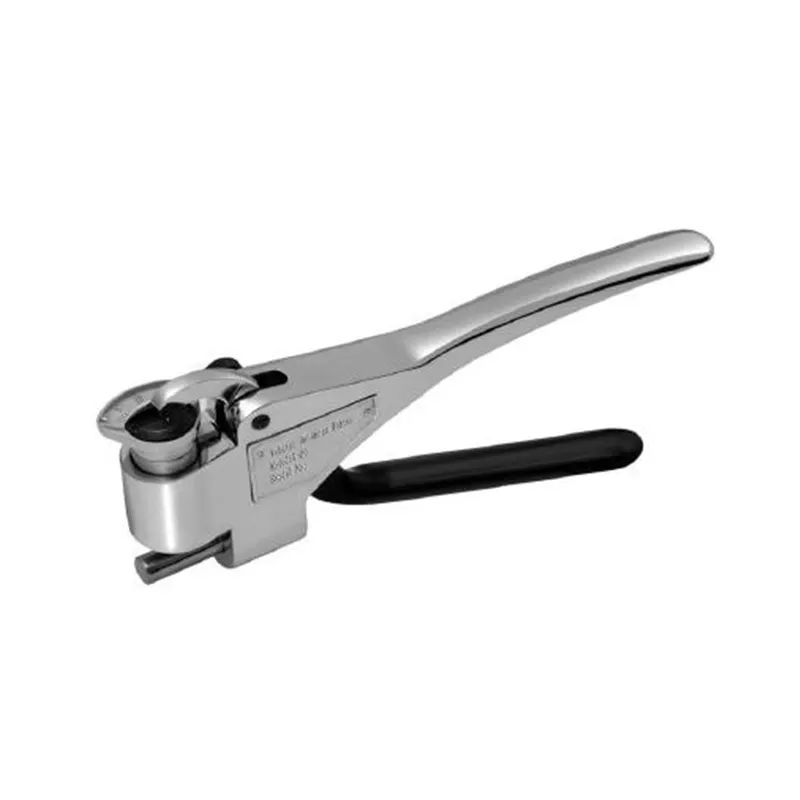

Now, when it comes to metals, Webster hardness testers are pretty well - known. We have two popular types of Webster hardness testers on our site. The Thin Aluminum Webster Hardness Tester is specifically designed for thin aluminum materials. It's got the right amount of sensitivity to accurately measure the hardness of thin sheets. And then there's the Common Aluminum Webster Hardness Tester, which is great for regular aluminum products.
But what about wood? Wood is a completely different ballgame compared to metals. Metals have a relatively uniform structure at the microscopic level. Their atoms are arranged in a regular pattern, which makes it easier to predict how they'll respond to the indentation of a hardness tester.
Wood, on the other hand, is a natural material with a complex and variable structure. It's made up of different types of cells, fibers, and vessels. The density of wood can vary greatly depending on the species, the part of the tree it comes from, and even the environmental conditions in which the tree grew.
One of the main issues with using a Webster hardness tester on wood is that wood is anisotropic. That means its properties, including hardness, can be different depending on the direction you're testing. For example, testing the hardness along the grain (longitudinal direction) will likely give you a different result than testing across the grain (transverse direction).
Another problem is that wood is a viscoelastic material. It can deform both elastically (like a spring, where it returns to its original shape) and plastically (where it stays deformed). When you press the Webster hardness tester onto wood, the wood may first deform elastically and then start to deform plastically over time. This time - dependent deformation can make it really hard to get an accurate and consistent hardness measurement.
Most Webster hardness testers are calibrated for metals. The scale on the tester is based on the behavior of metals under indentation. Wood doesn't follow the same rules as metals, so the readings you get from a Webster hardness tester on wood won't have any real meaning in the context of the standard Webster hardness scale.
There are other methods and tools that are more suitable for measuring the hardness of wood. One common method is the Janka hardness test. In this test, a small steel ball is pressed into the wood until it penetrates half of its diameter. The force required to do this is then measured, and that gives you the Janka hardness rating. This method takes into account the unique properties of wood and provides a more reliable measure of its hardness.
So, to answer the question, a Webster hardness tester is not really suitable for measuring the hardness of wood. It's designed for metals, and using it on wood won't give you accurate or meaningful results.
But if you're in the market for testing the hardness of metals, we've got you covered. Our Webster hardness testers are top - notch. They're easy to use, portable, and provide accurate results. Whether you're working with thin aluminum or regular aluminum, we have the right tester for you.
If you're interested in purchasing a Webster hardness tester, or if you have any questions about our products, don't hesitate to reach out. We're always happy to help you find the best solution for your hardness testing needs.
References
- ASTM International standards on hardness testing of metals
- Wood Handbook: Wood as an Engineering Material, Forest Products Laboratory
So, if you're in the metal - testing business, think of us for all your Webster hardness tester needs. We're here to make your hardness testing process a breeze!