

As a supplier of Rockwell hardness testers, I understand the significance of ensuring the authenticity of these precision instruments, especially when they are imported. The Rockwell hardness test is a widely used method for determining the hardness of materials, and the accuracy of the tester directly impacts the reliability of the test results. In this blog, I will share some practical steps and considerations to help you verify the authenticity of an imported Rockwell hardness tester.
1. Research the Manufacturer
The first step in verifying the authenticity of an imported Rockwell hardness tester is to research the manufacturer. Reputable manufacturers have a long - standing history in the industry, a good reputation for quality, and a strong commitment to research and development. You can start by checking the manufacturer's official website. A legitimate manufacturer will have a professional - looking website with detailed information about their products, including product specifications, features, and application cases.
For example, if you are considering a Metal and Plastic Rockwell Hardness Tester, the manufacturer's website should provide clear details about its testing capabilities for different materials, accuracy levels, and any special features it offers. You can also look for certifications on the website, such as ISO 9001, which indicates that the manufacturer follows international quality management standards.
Another way to research the manufacturer is to check industry reviews and forums. Look for feedback from other users who have purchased and used the same brand of Rockwell hardness testers. Positive reviews from professionals in the field can be a good sign of the manufacturer's credibility.

2. Examine the Documentation
When you receive an imported Rockwell hardness tester, carefully examine the accompanying documentation. A genuine product should come with a comprehensive user manual, calibration certificate, and warranty card.
The user manual should be well - written and in multiple languages, providing detailed instructions on how to operate the tester, perform calibrations, and troubleshoot common problems. It should also include safety instructions to ensure the user's well - being.
The calibration certificate is crucial as it verifies that the tester has been calibrated to meet the required standards. Check the date of calibration and the name of the calibration laboratory. A reliable calibration laboratory should be accredited by a recognized organization. If the calibration certificate is missing or looks suspicious, it could be a sign of a counterfeit product.
The warranty card should clearly state the terms and conditions of the warranty, including the duration, what is covered, and how to claim the warranty. A legitimate manufacturer will stand behind their product and offer a reasonable warranty period.
3. Inspect the Physical Appearance
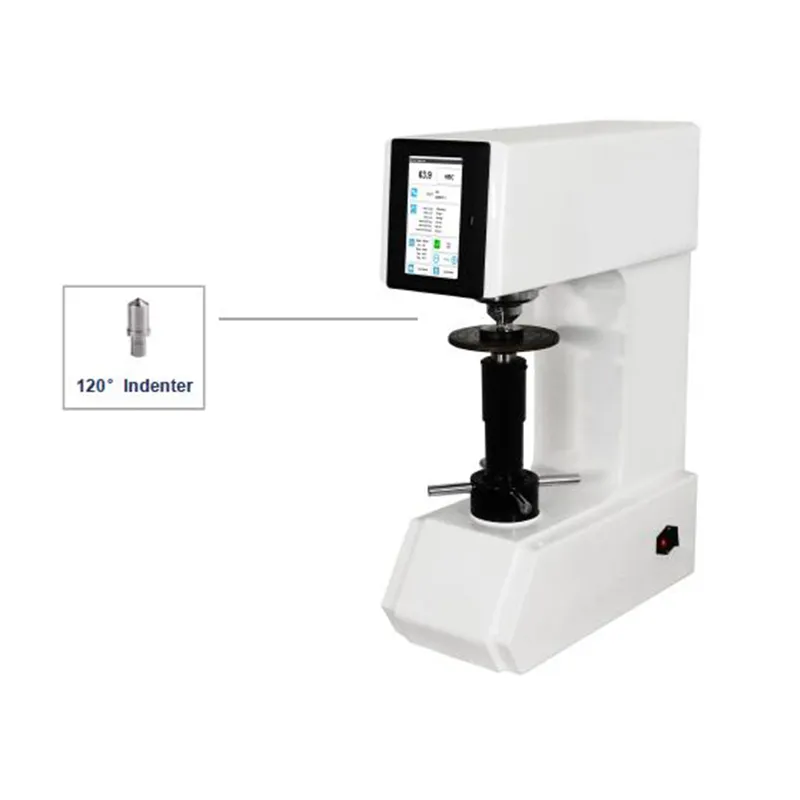
The physical appearance of the Rockwell hardness tester can also provide clues about its authenticity. A genuine tester is usually well - built with high - quality materials. Check the overall finish of the tester. It should have a smooth surface without any visible scratches, dents, or rough edges.
Examine the control panel and the display. The buttons should be responsive, and the display should show clear and accurate readings. If the display is blurry or the buttons are loose, it may indicate a sub - standard or counterfeit product.
Look at the indenters and anvils. These are critical components of the Rockwell hardness tester. The indenters should be made of high - quality materials, such as tungsten carbide, and have a precise shape. The anvils should also be in good condition and properly aligned.
4. Verify the Serial Number
Most Rockwell hardness testers have a unique serial number. This serial number can be used to verify the authenticity of the product. Contact the manufacturer directly and provide them with the serial number. They should be able to confirm whether the tester is a genuine product from their production line.
Some manufacturers also have an online database where you can enter the serial number to check the product's details, such as the date of manufacture, the model, and the original purchaser. If the manufacturer cannot provide information about the serial number or if the information does not match the product you received, it could be a red flag.
5. Check for Compatibility with Standards
Rockwell hardness testing is governed by international standards, such as ASTM E18 in the United States and ISO 6508 in Europe. A genuine Rockwell hardness tester should be designed and calibrated to meet these standards.
Check the product specifications to ensure that the tester can perform the Rockwell hardness test according to the relevant standards. It should be able to measure hardness within the specified range and with the required accuracy. If the tester does not meet the standards, it may not provide reliable test results, which can have serious consequences in quality control and material selection processes.
6. Test the Performance
Once you have verified the authenticity of the Rockwell hardness tester through the above steps, it is important to test its performance. You can do this by using standard reference blocks with known hardness values.
Place the reference block on the anvil of the tester and perform a series of hardness tests according to the manufacturer's instructions. Compare the test results with the known hardness values of the reference block. The difference between the measured values and the known values should be within the acceptable tolerance range specified by the manufacturer.
If you are using a HR30N HR30T Superficial Rockwell Durometer, make sure it can accurately measure the superficial hardness of materials. The tester should provide consistent results for multiple tests on the same reference block.
7. Seek Professional Assistance
If you are still unsure about the authenticity of the imported Rockwell hardness tester, it is advisable to seek professional assistance. You can contact a local metrology laboratory or a professional in the field of hardness testing. They have the expertise and equipment to conduct more in - depth inspections and tests on the tester.
A metrology laboratory can perform calibration checks and accuracy tests to ensure that the tester meets the required standards. They can also identify any signs of counterfeiting or sub - standard manufacturing.
Conclusion
Verifying the authenticity of an imported Rockwell hardness tester is a crucial step to ensure the reliability of hardness testing results. By researching the manufacturer, examining the documentation, inspecting the physical appearance, verifying the serial number, checking for compatibility with standards, testing the performance, and seeking professional assistance when needed, you can minimize the risk of purchasing a counterfeit or sub - standard product.
As a supplier of Rockwell hardness testers, we are committed to providing high - quality, genuine products. If you are interested in purchasing a Rockwell hardness tester or have any questions about authenticity verification, please feel free to contact us for further discussion and negotiation.
References
- ASTM International. (2023). ASTM E18 - 23: Standard Test Methods for Rockwell Hardness and Rockwell Superficial Hardness of Metallic Materials.
- International Organization for Standardization. (2022). ISO 6508 - 1:2022: Metallic materials — Rockwell hardness test — Part 1: Test method.