

Hey there! As a supplier of Rockwell hardness testers, I've been in the game for quite a while, and I'm super excited to share some insights about the characteristics of imported Rockwell hardness testers. These bad boys are a big deal in the industry, and understanding their features can really help you make the right choice for your testing needs.
High - Precision Testing
One of the most outstanding features of imported Rockwell hardness testers is their high precision. These machines are engineered with top - notch technology to ensure accurate hardness measurements. The precision is crucial because even a small error in hardness testing can lead to significant problems in product quality control. For example, in the manufacturing of aerospace components, a slight deviation in hardness can affect the structural integrity of the parts. Imported Rockwell hardness testers use advanced sensors and control systems to minimize measurement errors. They can detect even the slightest changes in hardness, making them ideal for industries where precision is non - negotiable.
Wide Range of Applications
Another great thing about imported Rockwell hardness testers is their wide range of applications. They can be used to test the hardness of various materials, including metals, plastics, and even tinplate. Whether you're in the automotive industry, testing the hardness of engine parts, or in the packaging industry, checking the hardness of tinplate cans, there's an imported Rockwell hardness tester that fits the bill.

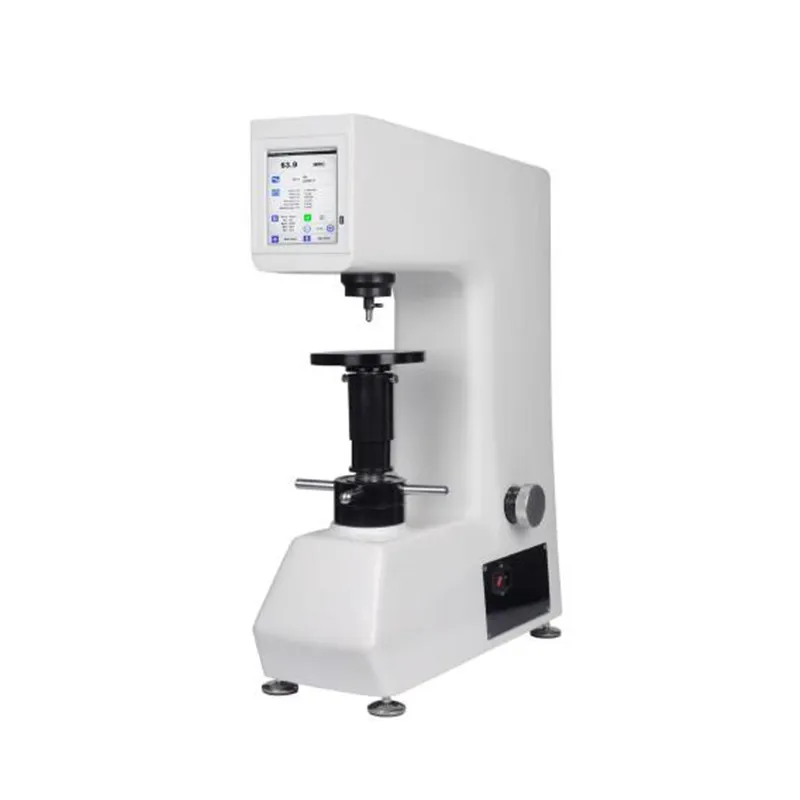
For those of you who are dealing with metals and plastics, the Metal and Plastic Rockwell Hardness Tester is a great option. It's specifically designed to handle the unique properties of these two materials, providing accurate and reliable results every time.
If you're looking for a tester that can automate the testing process, the Automatic Testing Process Rockwell Durometer is worth considering. This machine can save you a lot of time and effort by automatically performing the testing process, reducing the chance of human error.
And for tinplate testing, the Tinplate Testing Rockwell Hardness Machine is the way to go. It's calibrated to accurately measure the hardness of tinplate, which is essential for ensuring the quality of tinplate products.
Durability and Reliability
Imported Rockwell hardness testers are built to last. They are made from high - quality materials and undergo strict quality control during the manufacturing process. This means that they can withstand the rigors of daily use in industrial environments. Whether it's the harsh conditions of a metalworking shop or the constant use in a quality control laboratory, these testers can keep performing at their best.
The reliability of these machines is also a major plus. You don't have to worry about frequent breakdowns or inaccurate measurements. They are designed to provide consistent results over a long period of time, which is essential for businesses that rely on hardness testing for quality assurance.
User - Friendly Design
Most imported Rockwell hardness testers come with a user - friendly design. They are easy to operate, even for those who are new to hardness testing. The control panels are intuitive, with clear instructions and buttons. Many testers also come with digital displays that show the test results immediately, making it easy for you to record and analyze the data.
In addition, some imported testers have built - in help menus and tutorials. These resources can be really helpful if you run into any issues or have questions about how to use the machine. They can save you a lot of time and frustration, allowing you to focus on getting accurate test results.
Advanced Data Management
Imported Rockwell hardness testers often come with advanced data management features. They can store a large amount of test data, which you can access and analyze later. Some testers even allow you to connect to a computer via USB or other interfaces, so you can transfer the data for further analysis using specialized software.
This data management feature is very useful for quality control. You can track the hardness of products over time, identify trends, and make adjustments to your manufacturing process if necessary. It also helps in generating detailed reports for internal use or for sharing with clients.
Compatibility with International Standards
These testers are designed to comply with international standards for hardness testing, such as ASTM, ISO, and JIS. This means that the test results obtained from imported Rockwell hardness testers are recognized worldwide. If you're a company that exports products or works with international partners, having test results that meet international standards is crucial. It can help you avoid any disputes over product quality and ensure that your products meet the requirements of different markets.
Cost - Effectiveness in the Long Run
Although the initial cost of imported Rockwell hardness testers may be higher compared to some domestic models, they are actually cost - effective in the long run. Their high precision, durability, and reliability mean that you'll have fewer issues with inaccurate testing and frequent breakdowns. This can save you money on retesting, repairs, and replacement parts.
In addition, the advanced features and data management capabilities of these testers can help you improve your manufacturing process, reduce waste, and increase product quality. All these factors can contribute to cost savings and increased profitability for your business.
Conclusion
So, there you have it - the key characteristics of imported Rockwell hardness testers. They offer high precision, wide applications, durability, user - friendly design, advanced data management, compatibility with international standards, and cost - effectiveness in the long run. If you're in the market for a Rockwell hardness tester, I highly recommend considering an imported model.
If you're interested in learning more about our imported Rockwell hardness testers or want to discuss your specific testing needs, feel free to reach out to us. Let's have a chat and see how we can help you take your hardness testing to the next level.
References
- ASTM International Standards for Hardness Testing.
- ISO Standards on Material Hardness Testing.
- JIS Standards for Hardness Testing in Japan.