

Universal hardness testers are essential tools in various industries, used to measure the hardness of materials. When it comes to choosing a universal hardness tester, one of the primary decisions is whether to opt for a portable or a bench - top model. As a supplier of universal hardness testers, I have in - depth knowledge about the differences between these two types, and I'm here to share this information with you.
Design and Portability
The most obvious difference between portable and bench - top universal hardness testers lies in their design and portability. Portable hardness testers are, as the name suggests, designed to be easily carried around. They are compact, lightweight, and often battery - operated. This makes them ideal for on - site testing, where you need to measure the hardness of materials directly at the location where they are used, such as in construction sites, manufacturing plants, or even in the field.
For example, if you are in charge of checking the hardness of large metal structures in a bridge construction project, a portable hardness tester can be easily transported to different parts of the bridge. You can quickly and efficiently test the hardness at multiple points without having to move the heavy metal components to a testing laboratory.
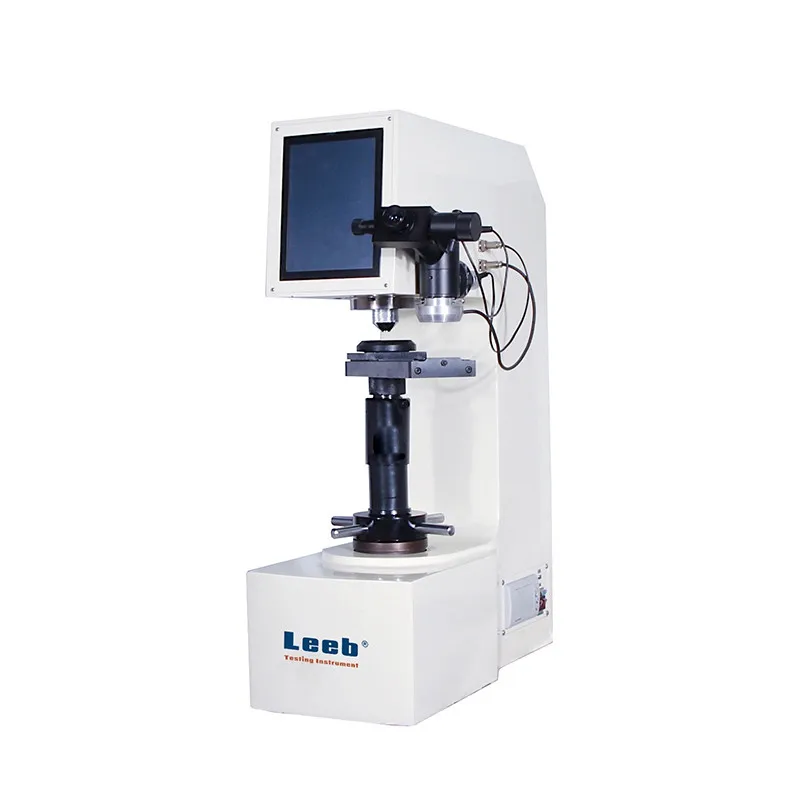
On the other hand, bench - top universal hardness testers are larger and heavier. They are designed to be placed on a stable bench or worktable in a laboratory or a dedicated testing area. Their larger size allows for more complex and precise mechanical components and more advanced testing mechanisms. While they lack the mobility of portable testers, bench - top models offer a high level of stability during testing, which is crucial for achieving accurate and repeatable results.
Testing Range and Accuracy
In terms of the testing range, both portable and bench - top universal hardness testers can measure a wide variety of hardness scales, including Brinell, Vickers, and Rockwell. However, there are some differences in their accuracy and the specific range of loads they can apply.
Bench - top universal hardness testers generally offer a wider range of test forces. They can apply higher loads, which is beneficial for testing larger and harder materials. For instance, when testing thick steel forgings, a bench - top tester can use a greater force to make an indentation, providing a more accurate representation of the material's hardness. These testers are also known for their high - precision results. The stable testing environment on a bench reduces the impact of external vibrations and handling errors, resulting in more reliable and consistent hardness measurements.
Portable hardness testers, while they can also perform a variety of hardness tests, usually have a more limited range of test forces. They are more suitable for testing smaller workpieces or materials with relatively lower hardness. Their accuracy may be slightly lower compared to bench - top models, especially when dealing with very hard or large - scale materials. However, modern portable hardness testers have made significant improvements in accuracy, and they can still provide reliable results for most on - site testing requirements.
Ease of Use
The ease of use of portable and bench - top universal hardness testers also differs. Portable hardness testers are designed with simplicity and convenience in mind. They often have intuitive interfaces, and the testing process can be completed quickly with minimal training. For example, many portable testers use a simple push - button or touch - screen operation to start the test and display the results. This makes them accessible to a wide range of users, including those who may not have extensive technical knowledge.
Bench - top universal hardness testers, although they offer more advanced features and higher accuracy, typically require more expertise to operate. Setting up the tester, adjusting the test parameters such as load, dwell time, and indentation measurement can be more complex. Operators usually need to have a certain level of training to ensure proper use and accurate results. However, the manufacturers of these testers often provide comprehensive training and support to help users get familiar with the equipment.
Cost
Cost is an important factor when considering whether to choose a portable or a bench - top universal hardness tester. Portable hardness testers are generally more affordable. Their lower cost is mainly due to their simpler design, fewer components, and the lower level of precision required compared to bench - top models. This makes them a cost - effective option for small businesses or those with limited budgets who still need to perform regular on - site hardness testing.
Bench - top universal hardness testers, on the other hand, are more expensive. The higher cost is associated with their larger size, more complex mechanical and electronic components, and the high level of accuracy they offer. These testers are typically used in larger laboratories or industries where precision and reliability are of utmost importance, and the long - term benefits of accurate testing outweigh the initial investment.
Applications
The choice between portable and bench - top universal hardness testers also depends on the specific applications. Portable hardness testers are widely used in industries such as construction, automotive maintenance, and field quality control. In the construction industry, they can be used to test the hardness of concrete, steel reinforcement bars, and other building materials directly on the site. In automotive maintenance, portable testers can be used to check the hardness of engine components, axles, and gears without having to disassemble the parts.
Bench - top universal hardness testers are commonly used in research institutions, large - scale manufacturing plants, and quality control laboratories. For example, in a high - precision manufacturing environment, such as aerospace component production, bench - top testers can provide the accurate hardness measurements needed to ensure the quality and performance of the parts. They are also used in material research to study the hardness changes of materials under different conditions.

Our Product Offerings
As a universal hardness tester supplier, we offer a wide range of both portable and bench - top models to meet the diverse needs of our customers. Our Digital Touch Screen Universal Hardness Tester is a state - of - the - art device with a user - friendly touch - screen interface. It can perform multiple hardness tests accurately and quickly, and it is suitable for both on - site and laboratory use.
Another popular product in our portfolio is the Brinell Vickers Rockwell Hardness Tester. This bench - top model offers high precision and a wide range of test forces, making it an ideal choice for professional testing laboratories and large - scale manufacturing facilities.
Conclusion
In conclusion, the choice between a portable and a bench - top universal hardness tester depends on several factors, including the testing environment, the type of materials to be tested, the required accuracy, the user's expertise, and the budget. Portable testers are great for on - site testing, offering convenience and mobility, while bench - top testers provide higher accuracy and a wider range of test forces, making them suitable for laboratory and high - precision applications.
If you are considering purchasing a universal hardness tester, we are here to help you make the right decision. Our team of experts can provide you with detailed information about our products, guide you through the selection process, and offer after - sales support. Contact us today to start a discussion about your specific requirements and to explore how our universal hardness testers can meet your needs.
References
- ASTM International. (20XX). Standard test methods for hardness testing.
- ISO. (20XX). International standards for hardness measurement.
- ASM Handbook Volume 8: Mechanical Testing and Evaluation. ASM International.