

Hey there! As a supplier of coating thickness gauges, I often get asked about the linearity of these nifty devices. So, let's dive right in and break down what linearity means in the context of a coating thickness gauge.
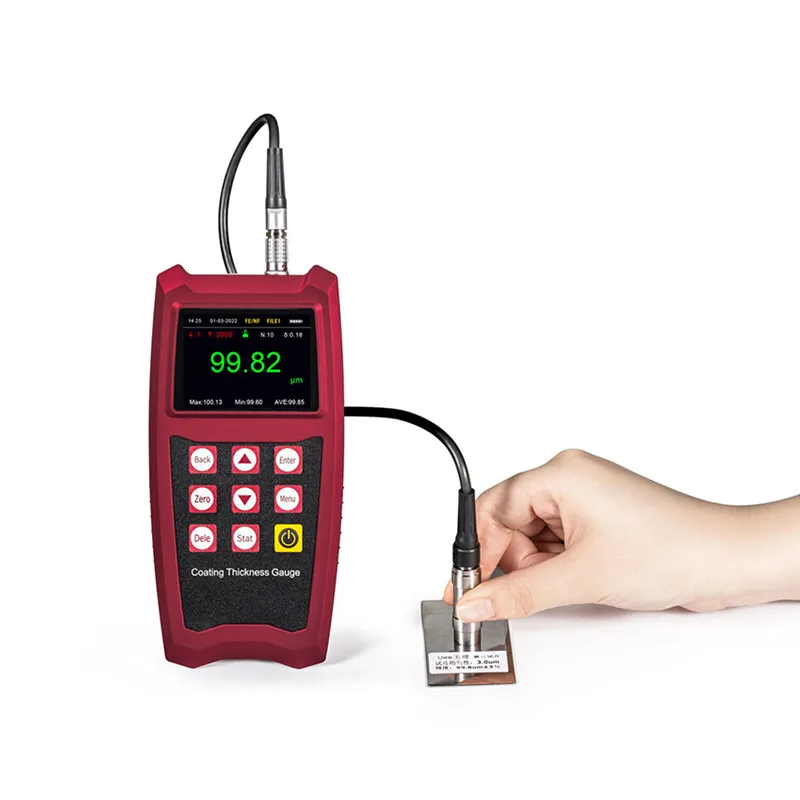
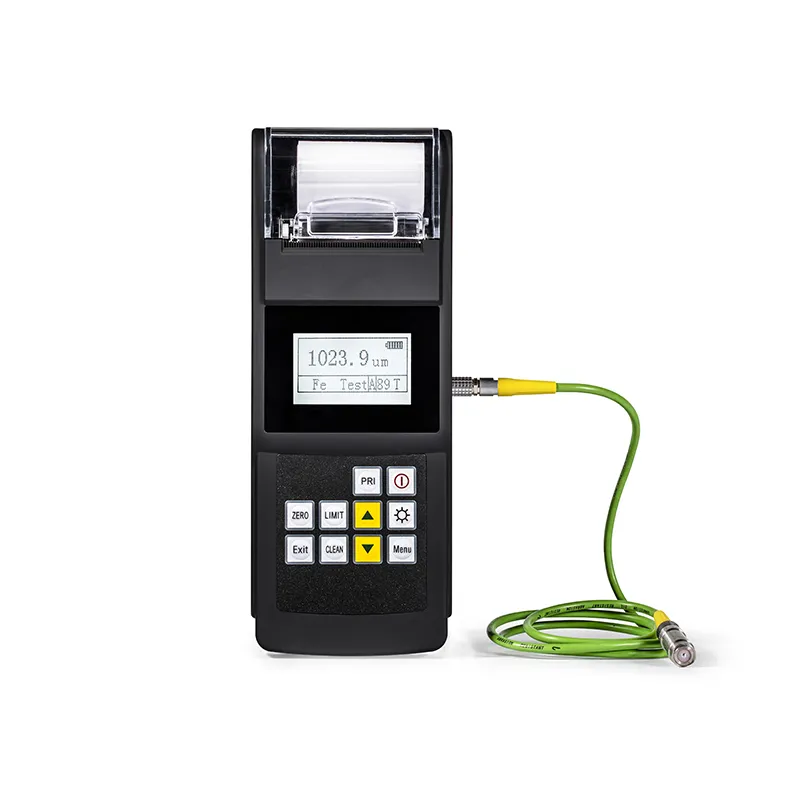
First off, what's a coating thickness gauge? Well, it's a tool that measures the thickness of a coating on a substrate. Coatings can be anything from paint on a car to a protective layer on metal. Knowing the thickness of these coatings is super important. For example, in the automotive industry, the right paint thickness can affect the look and durability of a car. In the manufacturing of metal products, a proper protective coating thickness can prevent corrosion.
Now, let's talk about linearity. In simple terms, linearity in a coating thickness gauge refers to how accurately the gauge can measure coating thickness across a range of values. A gauge with good linearity will provide measurements that are proportional to the actual thickness of the coating. Think of it like a ruler. If you measure something with a ruler, you expect the markings on the ruler to accurately represent the length of the object. Similarly, a coating thickness gauge with good linearity will give you measurements that closely match the real - world coating thickness.
Why is linearity so crucial? Well, inaccurate measurements can lead to a whole bunch of problems. If you're a manufacturer and you're applying a protective coating to metal parts, an inaccurate thickness measurement can mean that the coating is either too thin or too thick. A thin coating might not provide enough protection against corrosion, while a thick coating could be wasteful and might even affect the functionality of the part.
Let's take a look at some real - world applications where linearity matters.
Galvanized Layer Thickness Measurement
Galvanization is a process where a layer of zinc is applied to steel or iron to prevent rusting. Measuring the thickness of this galvanized layer is essential to ensure that the metal is properly protected. A coating thickness gauge with good linearity can accurately measure the thickness of the zinc layer, no matter if it's a thin layer on a small part or a thicker layer on a large structure. You can learn more about Galvanized Layer Thickness Measurement on our website.
Car Paint Tester
In the automotive industry, the paint job is not just about looks. It also provides protection to the car's body. A car paint tester with good linearity can measure the thickness of the paint layers accurately. This is important because different layers of paint, such as the primer, basecoat, and clearcoat, all contribute to the overall quality and durability of the paint job. If the measurements are off, it could mean that the paint job is not up to standard. Check out our Car Paint Tester page for more details.
NDT Thickness Measurement
Non - destructive testing (NDT) is a method used to evaluate the properties of a material without causing damage. Coating thickness measurement is an important part of NDT. A gauge with good linearity can accurately measure the thickness of coatings in NDT applications, ensuring that the integrity of the material is maintained. You can find more information about NDT Thickness Measurement on our site.
So, how do we ensure that our coating thickness gauges have good linearity? At our company, we use advanced calibration techniques. Calibration is like tuning an instrument. We compare the measurements of our gauges against known standards to make sure that they are accurate. We also use high - quality sensors and electronics in our gauges. These components are designed to provide consistent and accurate measurements across a wide range of coating thicknesses.
Another factor that can affect linearity is the type of measurement method used by the gauge. There are two main types of measurement methods for coating thickness gauges: magnetic induction and eddy current.
Magnetic induction is used for measuring non - magnetic coatings on magnetic substrates, like paint on steel. The principle behind it is that a magnetic field is created by the gauge, and the presence of the coating affects the strength of this magnetic field. The gauge then measures the change in the magnetic field to determine the coating thickness. Eddy current, on the other hand, is used for measuring non - conductive coatings on conductive substrates, such as anodized coatings on aluminum.
Both of these methods require careful calibration to ensure good linearity. Our engineers work hard to optimize these measurement methods so that our gauges can provide accurate results in different applications.
One thing to keep in mind is that linearity can be affected by external factors. For example, the surface roughness of the substrate can impact the accuracy of the measurement. A rough surface can cause the gauge to give inconsistent readings. That's why it's important to prepare the surface properly before taking measurements. Also, the temperature and humidity of the environment can affect the performance of the gauge. Our gauges are designed to be as resistant as possible to these external factors, but it's still something to be aware of.
When you're choosing a coating thickness gauge, linearity should be one of the top factors on your list. A gauge with poor linearity can lead to costly mistakes and rework. You want a gauge that you can trust to give you accurate measurements every time.
At our company, we're committed to providing high - quality coating thickness gauges with excellent linearity. We understand that our customers rely on our products to make important decisions in their manufacturing processes. Whether you're in the automotive industry, the metalworking industry, or any other field that requires coating thickness measurement, we've got the right gauge for you.
If you're interested in learning more about our coating thickness gauges or have any questions about linearity or other features, don't hesitate to reach out. We're here to help you make the best choice for your needs. Contact us today to start a discussion about your coating thickness measurement requirements and let's work together to find the perfect solution.
References
- ASTM International standards on coating thickness measurement
- ISO standards related to non - destructive testing and coating applications
- Technical literature from leading manufacturers in the coating thickness gauge industry