

Hey there! As a supplier of car paint testers, I often get asked about the measurement accuracy of these nifty devices, especially when it comes to different temperature ranges. So, let's dive right into it and explore how temperature can affect the accuracy of a car paint tester.
First off, let's understand what a car paint tester does. It's a tool that measures the thickness of the paint on a car's surface. This is super important for a bunch of reasons. For car manufacturers, it helps ensure that the paint job meets quality standards. For car owners and mechanics, it can be used to detect if a car has been repainted, which might indicate previous damage or repairs.
Now, temperature plays a crucial role in the accuracy of these measurements. Most car paint testers work based on either magnetic or eddy - current principles. In magnetic testers, a magnetic field is used to measure the distance between the tester's probe and the metal substrate beneath the paint. Eddy - current testers, on the other hand, use electromagnetic induction to measure the paint thickness.
In general, car paint testers are designed to work optimally within a specific temperature range. Usually, this range is around 20°C to 30°C (68°F to 86°F). When the temperature is within this sweet spot, the materials inside the tester, like the sensors and electronic components, function as they are supposed to. The magnetic properties of the probe and the electrical conductivity of the circuits remain stable, which allows for accurate measurements.
But what happens when the temperature goes outside this ideal range? Well, at lower temperatures, things can get a bit tricky. Cold temperatures can cause the paint to become more brittle and less flexible. This can change the way the paint adheres to the metal surface, and it might also affect the magnetic or electrical properties of the paint and the substrate. For example, the magnetic permeability of the metal can change with temperature, which can throw off the readings of a magnetic car paint tester.
Let's say you're testing a car in a cold garage where the temperature is around 5°C (41°F). The tester might give a reading that's slightly higher or lower than the actual paint thickness. This is because the cold has affected the physical and electrical characteristics of the paint and the underlying metal.
On the flip side, high temperatures can also mess with the accuracy of the measurements. When it's hot, the paint can expand, and the metal substrate can also undergo thermal expansion. This expansion can change the distance between the paint surface and the metal, which the tester is trying to measure. For instance, if you're testing a car on a scorching summer day with the temperature reaching 40°C (104°F), the tester might indicate a thicker paint layer than there actually is due to the expansion of the materials.
Another factor to consider is the effect of temperature on the tester itself. The electronic components inside the tester can be sensitive to heat. High temperatures can cause the circuits to overheat, which can lead to inaccurate readings. Some testers are equipped with temperature compensation features to try and counteract these effects, but they might not be 100% effective in extreme conditions.
So, how can we deal with these temperature - related accuracy issues? Well, if possible, it's best to test the car paint within the recommended temperature range. If you're working in a non - ideal temperature environment, you can let the car and the tester acclimate to the temperature for a while before taking measurements. This allows the paint and the metal to reach a stable state, which can improve the accuracy of the readings.

Now, I want to mention some of the other great products we offer as a car paint tester supplier. We have a Plastic Film Thickness Gauge that's perfect for measuring the thickness of plastic films. It's a handy tool for a variety of industries, not just automotive.
We also have NDT Thickness Measurement solutions. Non - destructive testing (NDT) is a great way to measure the thickness of coatings without damaging the surface. This is especially useful when you're dealing with valuable or delicate car finishes.
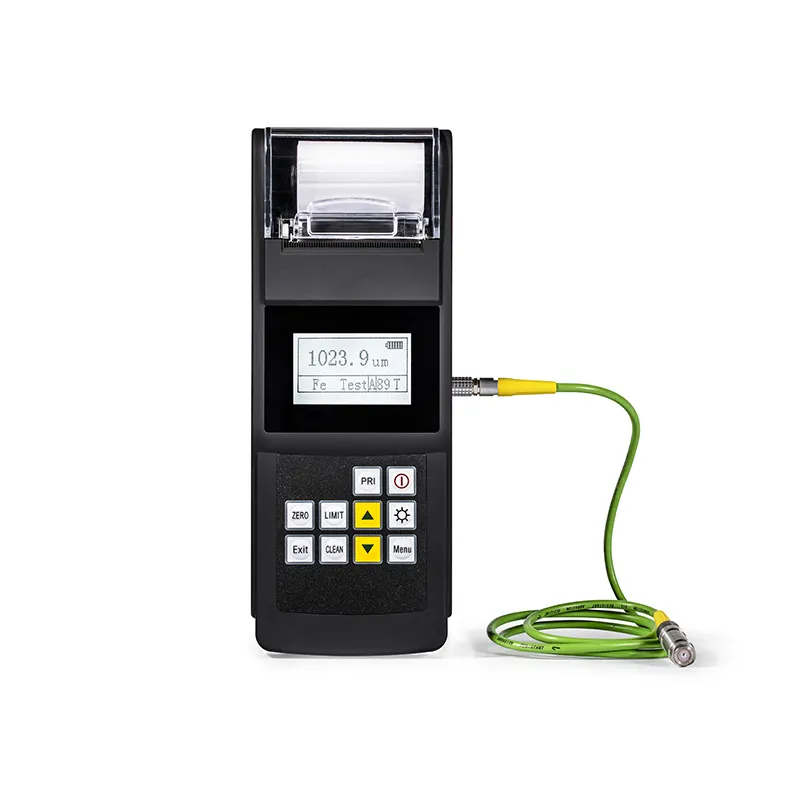
And for those who need to document their measurements, we offer a Coating Thickness Tester with Prtiner. It allows you to print out the measurement results right on the spot, which is super convenient for record - keeping.
If you're in the market for a car paint tester or any of our other products, I encourage you to reach out to us. We're always happy to discuss your specific needs and help you find the right solution. Whether you're a car manufacturer, a mechanic, or a car enthusiast, we have the tools to meet your requirements.
In conclusion, the measurement accuracy of a car paint tester is highly dependent on the temperature range. While these testers are designed to work well within a certain temperature band, deviations from this range can lead to inaccurate readings. By understanding how temperature affects the measurements and taking appropriate precautions, you can get the most accurate results possible. So, don't hesitate to contact us if you have any questions or if you're ready to make a purchase. We're here to support you in getting the best quality testing equipment.
References
- ASTM International standards on coating thickness measurement
- Technical manuals of car paint testers