

In the realm of manufacturing, quality control stands as a cornerstone for ensuring the reliability, performance, and safety of products. Among the various tools and techniques employed in this crucial process, hardness testers have emerged as indispensable instruments. As a leading supplier of hardness testers, I have witnessed firsthand the transformative impact these devices can have on quality control in manufacturing. In this blog post, I will explore the question of whether a hardness tester can be used for quality control in manufacturing, delving into the principles, applications, and benefits of these essential tools.
Understanding Hardness Testing
Before we delve into the role of hardness testers in quality control, it is essential to understand what hardness testing entails. Hardness is a material's resistance to localized deformation, typically caused by indentation, scratching, or abrasion. Hardness testing measures this resistance, providing valuable insights into a material's properties and performance.
There are several methods of hardness testing, each with its own advantages and limitations. The most common methods include the Brinell, Rockwell, Vickers, and Knoop tests, as well as the Leeb and Webster tests. These methods differ in the type of indenter used, the applied load, and the measurement technique.
The Role of Hardness Testers in Quality Control
Hardness testers play a vital role in quality control in manufacturing for several reasons. Firstly, they provide a quick and non-destructive way to assess the quality of materials and components. By measuring the hardness of a material, manufacturers can ensure that it meets the specified requirements and standards. This is particularly important in industries such as aerospace, automotive, and medical, where the quality and reliability of components are critical.
Secondly, hardness testing can help identify potential issues or defects in materials and components. For example, if the hardness of a material is too low, it may indicate that the material has been overheated or has a high level of impurities. On the other hand, if the hardness is too high, it may suggest that the material has been cold-worked or has a high level of internal stress. By detecting these issues early on, manufacturers can take corrective action to prevent costly failures and recalls.
Thirdly, hardness testing can be used to monitor the consistency and uniformity of materials and components. In manufacturing, it is essential to ensure that all parts are made to the same specifications and have the same properties. By regularly testing the hardness of materials and components, manufacturers can identify any variations or inconsistencies and take steps to correct them. This helps to improve the overall quality and reliability of the products.
Applications of Hardness Testers in Manufacturing
Hardness testers are used in a wide range of manufacturing applications, including:

-
Metals and Alloys: Hardness testing is commonly used in the metalworking industry to assess the quality and properties of metals and alloys. It can be used to test raw materials, finished products, and components, such as gears, shafts, and bearings. For example, Common Aluminum Webster Hardness Tester is specifically designed for testing the hardness of aluminum alloys, which are widely used in the automotive and aerospace industries.
-
Plastics and Polymers: Hardness testing is also used in the plastics and polymer industry to evaluate the mechanical properties of these materials. It can be used to test the hardness of plastic parts, such as injection-molded components, extruded profiles, and sheets. For example, the Shore hardness test is commonly used to measure the hardness of elastomers and rubbers.
-
Ceramics and Composites: Hardness testing is important in the ceramics and composites industry to assess the quality and performance of these materials. It can be used to test the hardness of ceramic tiles, cutting tools, and composite materials, such as carbon fiber reinforced polymers. For example, the Vickers hardness test is commonly used to measure the hardness of ceramics and composites.
-
Medical Devices: Hardness testing is critical in the medical device industry to ensure the safety and effectiveness of medical devices. It can be used to test the hardness of medical implants, such as hip and knee replacements, as well as surgical instruments and dental materials. For example, the Rockwell hardness test is commonly used to measure the hardness of stainless steel medical devices.
Benefits of Using Hardness Testers for Quality Control
There are several benefits of using hardness testers for quality control in manufacturing, including:
-
Improved Product Quality: By ensuring that materials and components meet the specified hardness requirements, hardness testing helps to improve the overall quality and reliability of products. This reduces the risk of failures and recalls, which can save manufacturers time and money.
-
Increased Efficiency: Hardness testing is a quick and non-destructive way to assess the quality of materials and components. This allows manufacturers to make decisions quickly and efficiently, without having to wait for the results of more time-consuming tests.
-
Cost Savings: By detecting potential issues or defects early on, hardness testing helps to prevent costly failures and recalls. This can save manufacturers significant amounts of money in terms of production costs, warranty claims, and customer compensation.
-
Compliance with Standards: Hardness testing is often required by industry standards and regulations. By using hardness testers, manufacturers can ensure that their products meet these requirements and avoid potential legal issues.
Choosing the Right Hardness Tester
When choosing a hardness tester for quality control in manufacturing, it is important to consider several factors, including:
-
Type of Material: Different materials require different types of hardness tests. For example, metals and alloys are typically tested using the Brinell, Rockwell, or Vickers tests, while plastics and polymers are often tested using the Shore hardness test.
-
Size and Shape of the Specimen: The size and shape of the specimen can also affect the choice of hardness tester. For example, small or irregularly shaped specimens may require a portable or handheld hardness tester, while larger specimens may require a bench-top or floor-standing hardness tester.
-
Accuracy and Precision: The accuracy and precision of the hardness tester are important factors to consider. It is important to choose a hardness tester that can provide accurate and repeatable results, within the required tolerance.
-
Ease of Use: The hardness tester should be easy to use and operate, with clear instructions and a user-friendly interface. This helps to ensure that the tests are performed correctly and that the results are reliable.
-
Cost: The cost of the hardness tester is also an important factor to consider. It is important to choose a hardness tester that offers the best value for money, based on the features and performance required.
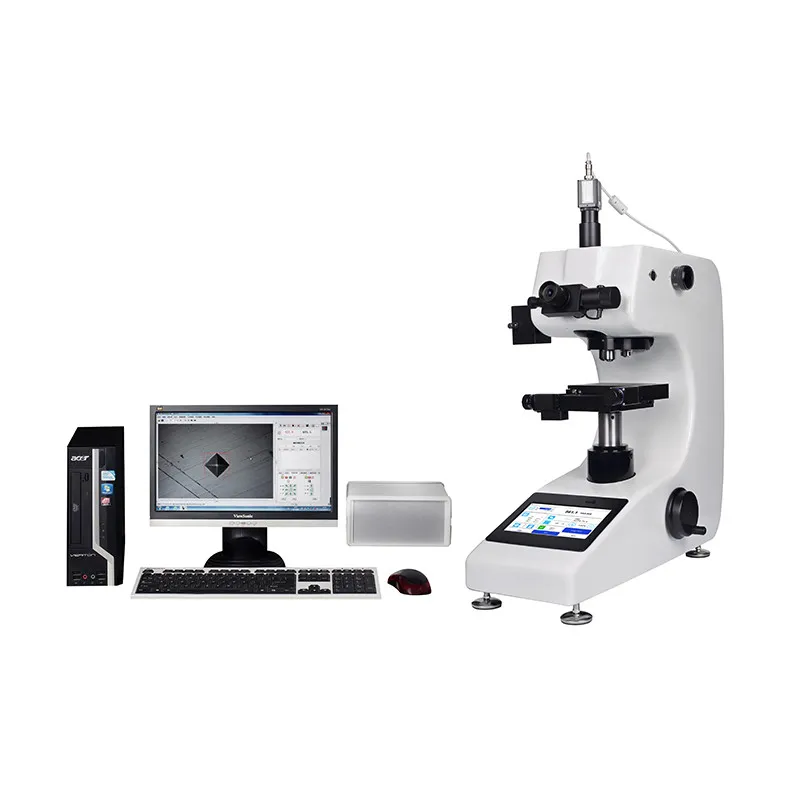
As a leading supplier of hardness testers, we offer a wide range of high-quality hardness testers to meet the needs of different industries and applications. Our products include Automatic Focusing Motorized X-Y-Z Axis Micro Vickers, Pen Type Leeb Hardness Tester, and many others. Our hardness testers are designed to provide accurate, reliable, and easy-to-use solutions for quality control in manufacturing.
Conclusion
In conclusion, hardness testers are essential tools for quality control in manufacturing. They provide a quick and non-destructive way to assess the quality of materials and components, identify potential issues or defects, and monitor the consistency and uniformity of products. By using hardness testers, manufacturers can improve the overall quality and reliability of their products, increase efficiency, save costs, and ensure compliance with industry standards and regulations.
If you are interested in learning more about our hardness testers or would like to discuss your specific requirements, please do not hesitate to contact us. We would be happy to help you choose the right hardness tester for your needs and provide you with the support and service you deserve.
References
- ASTM International. (2021). Standard Test Methods for Rockwell Hardness and Rockwell Superficial Hardness of Metallic Materials. ASTM E18-21.
- ISO. (2020). Metallic materials - Vickers hardness test - Part 1: Test method. ISO 6507-1:2020.
- DIN. (2018). Testing of metallic materials - Brinell hardness test - Part 1: Test method. DIN EN ISO 6506-1:2018.
- ASTM International. (2018). Standard Test Method for Rubber Property - Durometer Hardness. ASTM D2240-18.