

Can a shore hardness tester measure the hardness of leather?
As a supplier of shore hardness testers, I often encounter various inquiries about the applications of our products. One common question that arises is whether a shore hardness tester can be used to measure the hardness of leather. In this blog post, I will delve into this topic, exploring the principles of shore hardness testing, the characteristics of leather, and the feasibility of using a shore hardness tester for leather hardness measurement.
Understanding Shore Hardness Testing
Shore hardness testing is a widely used method for measuring the hardness of elastomers, plastics, and other non - metallic materials. The test is based on the principle of measuring the resistance of a material to indentation by a specific indenter under a defined force. There are different types of shore hardness scales, such as Shore A and Shore D, which are designed for materials with different degrees of hardness. The Shore A scale is typically used for softer materials like rubbers and elastomers, while the Shore D scale is used for harder plastics and rigid materials.
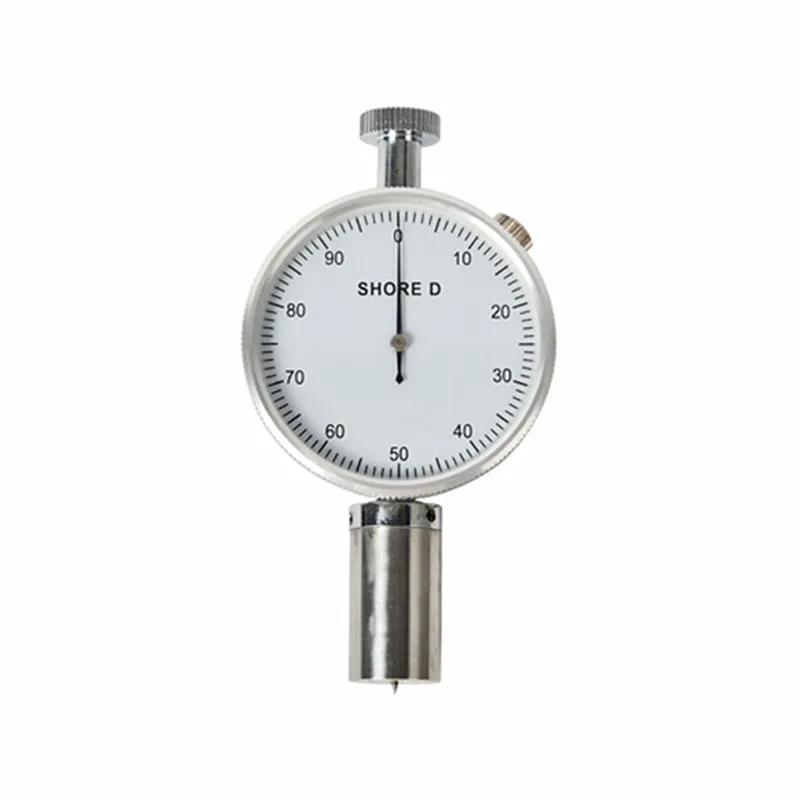
Our company offers a range of shore hardness testers, including the Dial Shore Hardness Tester for Plastics, the Shore A Digital Hardness Tester, and the Dial Shore Hardness Tester for Rubbers. These testers are designed to provide accurate and reliable hardness measurements for a variety of materials.
Characteristics of Leather
Leather is a natural material made from the skins of animals, typically cattle, sheep, or goats. It has a complex structure consisting of collagen fibers, which give it strength and flexibility. The hardness of leather can vary depending on several factors, including the type of animal skin, the tanning process, and the finishing treatments.
Leather can be classified into different types based on its hardness and texture. For example, full - grain leather is the highest quality and most durable type, with a relatively hard and stiff texture. On the other hand, split leather is softer and more flexible, often used for products like wallets and gloves.
Feasibility of Using a Shore Hardness Tester for Leather
The question of whether a shore hardness tester can measure the hardness of leather is not straightforward. While shore hardness testers are primarily designed for elastomers and plastics, they can potentially be used to measure the relative hardness of leather.
One of the challenges in using a shore hardness tester for leather is the anisotropic nature of leather. Leather has different mechanical properties in different directions due to the orientation of its collagen fibers. This means that the hardness measurement may vary depending on the direction in which the indenter is applied. Additionally, the surface finish of leather can also affect the hardness measurement. Leather with a smooth finish may give different results compared to leather with a rough or textured surface.
Another factor to consider is the scale of the shore hardness tester. As mentioned earlier, the Shore A scale is suitable for softer materials, while the Shore D scale is for harder materials. Leather can fall within a wide range of hardness values, and it may be necessary to select the appropriate scale for accurate measurement. In most cases, the Shore A scale may be more appropriate for softer leathers, while the Shore D scale could be used for harder, more rigid leathers.
However, it's important to note that shore hardness testing may not provide a comprehensive assessment of leather quality. Leather has other important properties such as tensile strength, tear resistance, and flexibility, which are not directly measured by a shore hardness tester.
Conducting a Shore Hardness Test on Leather
If you decide to use a shore hardness tester to measure the hardness of leather, here are some steps to follow:
- Prepare the leather sample: Make sure the leather sample is clean and free from any debris or contaminants. The sample should be flat and have a sufficient thickness to ensure accurate measurement.
- Select the appropriate shore hardness tester and scale: Based on the expected hardness of the leather, choose either the Shore A or Shore D scale. Our Shore A Digital Hardness Tester provides a convenient and accurate way to measure the hardness of softer leathers, while the Dial Shore Hardness Tester for Plastics with the Shore D scale can be used for harder leathers.
- Apply the indenter: Place the indenter of the shore hardness tester perpendicular to the surface of the leather sample. Apply a steady force until the indenter is fully seated in the leather. Make sure to apply the force evenly and avoid any sudden movements.
- Record the measurement: Once the indenter is fully seated, read the hardness value from the scale of the shore hardness tester. Take multiple measurements at different locations on the leather sample to account for any variations in hardness.
- Analyze the results: Compare the hardness values obtained from different locations on the leather sample. If there are significant variations, it may indicate differences in the leather's quality or processing.
Limitations and Considerations
While shore hardness testing can provide some information about the relative hardness of leather, it has its limitations. As mentioned earlier, it does not measure other important properties of leather such as tensile strength and tear resistance. Additionally, the results of shore hardness testing on leather may not be directly comparable to those obtained on elastomers or plastics, as leather has a different structure and composition.

It's also important to note that the accuracy of shore hardness testing on leather can be affected by factors such as the thickness of the leather sample, the presence of moisture, and the temperature. Therefore, it's recommended to conduct the test under controlled conditions to ensure consistent and reliable results.
Conclusion
In conclusion, a shore hardness tester can potentially be used to measure the relative hardness of leather. However, it should be used with caution, taking into account the unique characteristics of leather and the limitations of shore hardness testing. While it can provide some useful information, it should not be the sole method for evaluating leather quality.
If you are interested in purchasing a shore hardness tester for your leather testing needs, we are here to assist you. Our team of experts can help you select the most suitable tester for your specific requirements and provide you with training and support to ensure accurate and reliable results. Contact us today to start a discussion about your procurement needs and explore how our shore hardness testers can benefit your business.
References
- ASTM D2240 - Standard Test Method for Rubber Property - Durometer Hardness.
- ISO 868:2003 - Plastics and ebonite - Determination of indentation hardness by means of a durometer (Shore hardness).