

Can a surface waviness tester measure the waviness of a cylindrical surface?
As a supplier of surface waviness testers, I often encounter questions from customers regarding the capabilities of our instruments. One of the most frequently asked questions is whether a surface waviness tester can accurately measure the waviness of a cylindrical surface. In this blog post, I will delve into this topic, exploring the principles behind surface waviness measurement and the suitability of our testers for cylindrical surfaces.
Understanding Surface Waviness
Before we discuss the measurement of waviness on cylindrical surfaces, it's essential to understand what surface waviness is. Surface waviness refers to the deviation of a surface from its ideal form, occurring at a larger scale than surface roughness but smaller than form errors. It is typically characterized by a series of peaks and valleys that repeat over a relatively long distance. Waviness can have a significant impact on the performance of mechanical components, affecting factors such as friction, wear, and sealing.
Measuring Surface Waviness
Surface waviness testers are designed to measure the height variations of a surface and provide quantitative data on its waviness characteristics. These instruments typically use a stylus or optical sensor to scan the surface and record the vertical displacements. The data collected is then analyzed using specialized software to calculate parameters such as waviness height (Wt), waviness average (Wa), and waviness ten - point height (Wz).
Challenges in Measuring Cylindrical Surfaces
Measuring the waviness of a cylindrical surface presents several challenges compared to measuring flat surfaces. One of the primary challenges is the curvature of the surface. The stylus or sensor of a surface waviness tester needs to follow the curved path of the cylinder accurately to obtain reliable measurements. If the instrument is not properly calibrated or adjusted, it may introduce errors due to the misalignment between the measuring probe and the surface.
Another challenge is the presence of form errors in the cylindrical surface. Form errors, such as roundness and cylindricity, can affect the measurement of waviness. It is crucial to separate the form errors from the waviness component to obtain accurate results. This often requires advanced data processing techniques and the use of appropriate filtering methods.
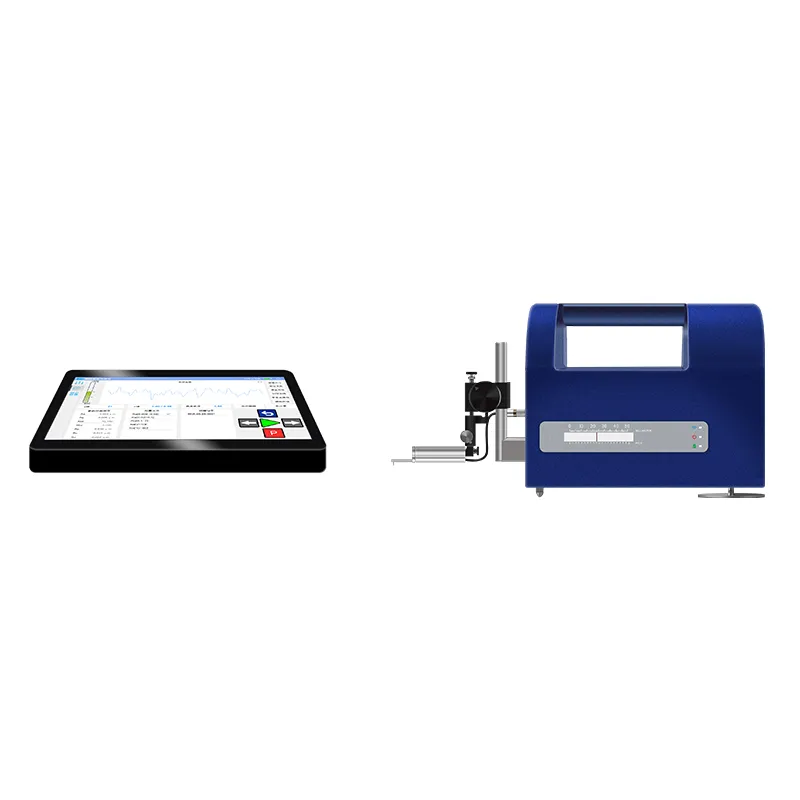
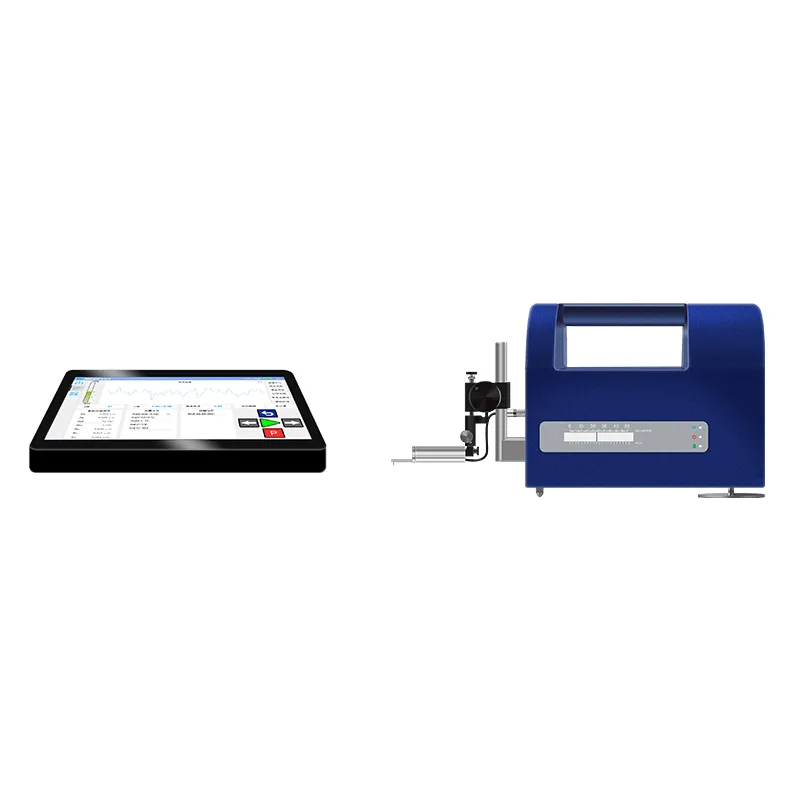
Can Our Surface Waviness Testers Measure Cylindrical Surfaces?
The answer is yes. Our surface waviness testers are equipped with advanced features and technologies that enable them to measure the waviness of cylindrical surfaces accurately.
First, our instruments are designed with high - precision probes and sensors that can adapt to the curvature of the cylindrical surface. The probes are capable of following the curved path smoothly, ensuring that the measurements are taken at the correct points on the surface. For example, our Wired Connection Roguhness Tester uses a highly sensitive stylus that can maintain contact with the cylindrical surface even at high scanning speeds.
Second, our testers come with powerful data processing software that can effectively separate the form errors from the waviness component. The software uses advanced filtering algorithms to remove the long - wavelength form errors and isolate the waviness characteristics. This allows for accurate measurement and analysis of the waviness of the cylindrical surface. Our Waviness and Roguhness Tester Measuring Range 1000μm is equipped with such sophisticated software, which can provide detailed and reliable measurement results.
Applications of Measuring Cylindrical Surface Waviness
Accurately measuring the waviness of cylindrical surfaces has numerous applications in various industries. In the automotive industry, cylindrical components such as engine cylinders, pistons, and shafts need to have precise waviness characteristics to ensure proper functioning and reduce friction and wear. By using our surface waviness testers, automotive manufacturers can quality - control these components and improve the overall performance and reliability of their vehicles.
In the aerospace industry, cylindrical parts like turbine shafts and landing gear components are subject to high - stress conditions. Measuring the waviness of these components helps to detect potential defects and ensure their structural integrity. Our surface waviness testers can provide the necessary data for aerospace engineers to make informed decisions about the design and manufacturing of these critical components.
Advantages of Choosing Our Surface Waviness Testers
Apart from the ability to measure cylindrical surfaces, our surface waviness testers offer several other advantages. They are highly accurate, with measurement uncertainties within tight tolerances. This ensures that the data obtained is reliable and can be used for critical decision - making.
Our testers are also user - friendly, with intuitive interfaces and easy - to - use software. Even operators with limited technical knowledge can quickly learn how to operate the instruments and obtain accurate measurement results.
In addition, our company provides excellent after - sales service and technical support. Our team of experts is always available to assist customers with installation, calibration, and troubleshooting, ensuring that the instruments are always in optimal working condition.
Conclusion
In conclusion, a surface waviness tester can indeed measure the waviness of a cylindrical surface. Our surface waviness testers, with their advanced features and technologies, are well - suited for this task. They can overcome the challenges associated with measuring cylindrical surfaces and provide accurate and reliable measurement results.
If you are in need of a surface waviness tester for measuring cylindrical surfaces or any other surface measurement requirements, we invite you to contact us for a detailed discussion. Our team of experts will be happy to help you choose the most suitable instrument for your specific needs and guide you through the procurement process.
References
- ISO 4287: Geometrical product specifications (GPS) - Surface texture: Profile method - Terms, definitions and surface texture parameters.
- ASME B46.1: Surface Texture (Surface Roughness, Waviness, and Lay).