

Can a universal hardness tester test the hardness of jewelry materials?
As a supplier of universal hardness testers, I often encounter inquiries from customers in the jewelry industry about whether our devices can accurately measure the hardness of jewelry materials. This blog post aims to explore this question in detail, shedding light on the capabilities of universal hardness testers when it comes to testing jewelry materials.
Understanding Jewelry Materials and Their Hardness
Jewelry materials come in a wide variety, including precious metals like gold, silver, and platinum, as well as gemstones such as diamonds, rubies, emeralds, and sapphires. Each material has its own unique hardness, which is an important property that affects its durability, resistance to scratching, and overall quality.
The hardness of a material is typically measured on the Mohs scale, which ranges from 1 (softest) to 10 (hardest). For example, talc has a Mohs hardness of 1, while diamonds have a Mohs hardness of 10. However, the Mohs scale is a qualitative measure and does not provide precise numerical values for hardness. In industrial applications, more accurate methods of hardness testing are required, such as the Brinell, Vickers, and Rockwell hardness tests.
How Universal Hardness Testers Work
Universal hardness testers are versatile instruments that can perform multiple types of hardness tests, including Brinell, Vickers, and Rockwell. These testers work by applying a specific load to the surface of a material using an indenter of a particular shape (e.g., a ball, pyramid, or cone) and measuring the size of the indentation left behind. The size of the indentation is then used to calculate the hardness of the material according to the specific test method.
The ability to perform multiple types of tests makes universal hardness testers highly adaptable and suitable for testing a wide range of materials, including metals, alloys, ceramics, and polymers. However, the question remains: Can they effectively test the hardness of jewelry materials?
Testing Precious Metals
Precious metals such as gold, silver, and platinum are commonly used in jewelry making. These metals are relatively soft compared to some other materials, with a Mohs hardness ranging from 2.5 to 4.5. Universal hardness testers can be used to accurately measure the hardness of precious metals using the Brinell, Vickers, or Rockwell test methods.
The Brinell test is often used for testing the hardness of softer metals, as it applies a relatively large load over a large area, resulting in a distinct indentation. The Vickers test, on the other hand, uses a square-based pyramid indenter and is suitable for testing both hard and soft materials. The Rockwell test is a faster and more convenient method that uses a direct-reading scale to measure hardness.
When testing precious metals, it is important to choose the appropriate test method and load to ensure accurate results. For example, a lighter load may be required for testing thin or delicate jewelry pieces to avoid damaging them. Additionally, the surface of the jewelry should be clean and smooth to ensure consistent indentation measurements.
Testing Gemstones
Gemstones are another important component of jewelry, and their hardness plays a crucial role in their durability and value. Diamonds, for example, are the hardest natural material on Earth, with a Mohs hardness of 10. Other gemstones, such as rubies, emeralds, and sapphires, have a Mohs hardness ranging from 7 to 9.
Measuring the hardness of gemstones can be more challenging than testing precious metals, as gemstones are often small, irregularly shaped, and can be easily damaged. Universal hardness testers can be used to test the hardness of gemstones using the Vickers or Knoop test methods, which use a small, pointed indenter to apply a precise load to the surface of the gemstone.
However, it is important to note that testing the hardness of gemstones requires specialized knowledge and expertise, as well as careful handling to avoid damaging the gemstones. Additionally, the hardness of a gemstone can vary depending on its orientation and crystal structure, so multiple measurements may be required to obtain accurate results.
Advantages of Using Universal Hardness Testers for Jewelry Testing
There are several advantages to using universal hardness testers for testing the hardness of jewelry materials. Firstly, universal hardness testers provide accurate and reliable results, allowing jewelers and manufacturers to ensure the quality and consistency of their products. This is particularly important in the jewelry industry, where the value of a piece of jewelry can be significantly affected by its hardness and durability.
Secondly, universal hardness testers are versatile and can perform multiple types of tests, making them suitable for testing a wide range of jewelry materials. This flexibility allows jewelers and manufacturers to use a single instrument for all their hardness testing needs, reducing the need for multiple specialized testers.
Finally, universal hardness testers are relatively easy to use and require minimal training. This makes them accessible to jewelers and small-scale manufacturers who may not have the resources or expertise to operate more complex testing equipment.
Conclusion
In conclusion, a universal hardness tester can be a valuable tool for testing the hardness of jewelry materials. Whether you are testing precious metals or gemstones, a universal hardness tester can provide accurate and reliable results, helping you to ensure the quality and durability of your jewelry products.
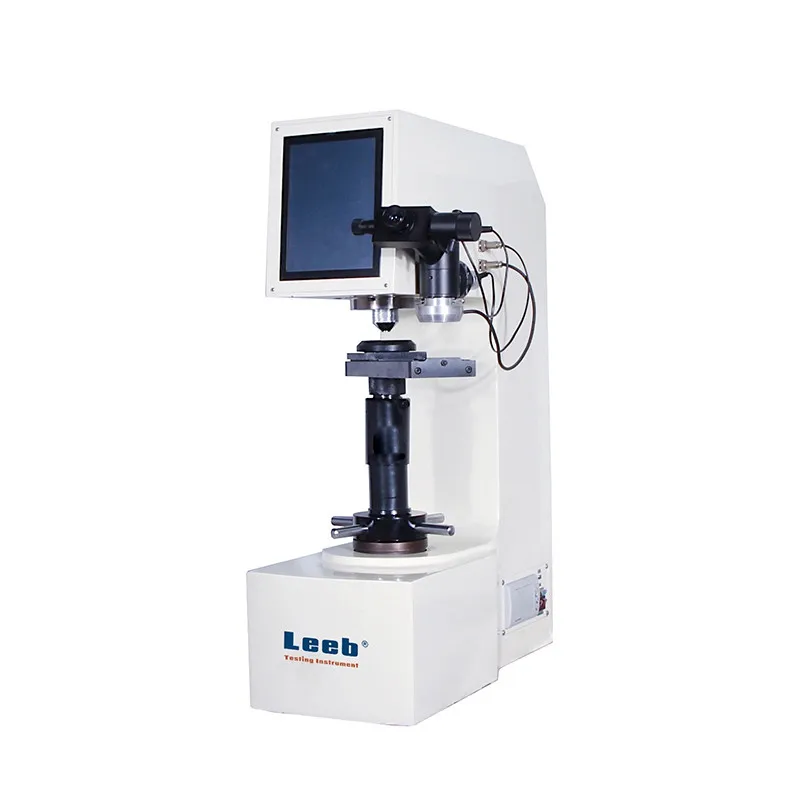
If you are in the jewelry industry and are looking for a reliable and versatile hardness testing solution, I invite you to explore our range of Brinell Vickers Rockwell Hardness Tester. Our testers are designed to meet the highest standards of accuracy and reliability, and are suitable for testing a wide range of jewelry materials.
For more information about our Digital Touch Screen Universal Hardness Tester and other products, please feel free to contact us to discuss your specific requirements and find the best solution for your business.

References
- Callister, W. D., & Rethwisch, D. G. (2017). Materials science and engineering: An introduction. John Wiley & Sons.
- Shackelford, J. F. (2019). Introduction to materials science for engineers. Pearson.
-ASM Handbook Volume 8: Mechanical Testing and Evaluation, ASM International, 2000.