

How to choose a suitable coating thickness gauge?
When it comes to the quality control and inspection of coated products, a coating thickness gauge plays a crucial role. As a supplier of coating thickness gauges, I understand the significance of helping customers select the most appropriate device for their specific needs. In this blog post, I will guide you through the essential factors to consider when choosing a coating thickness gauge.
Understanding the Types of Coating Thickness Gauges
There are primarily two types of coating thickness gauges - magnetic induction gauges and eddy - current gauges.
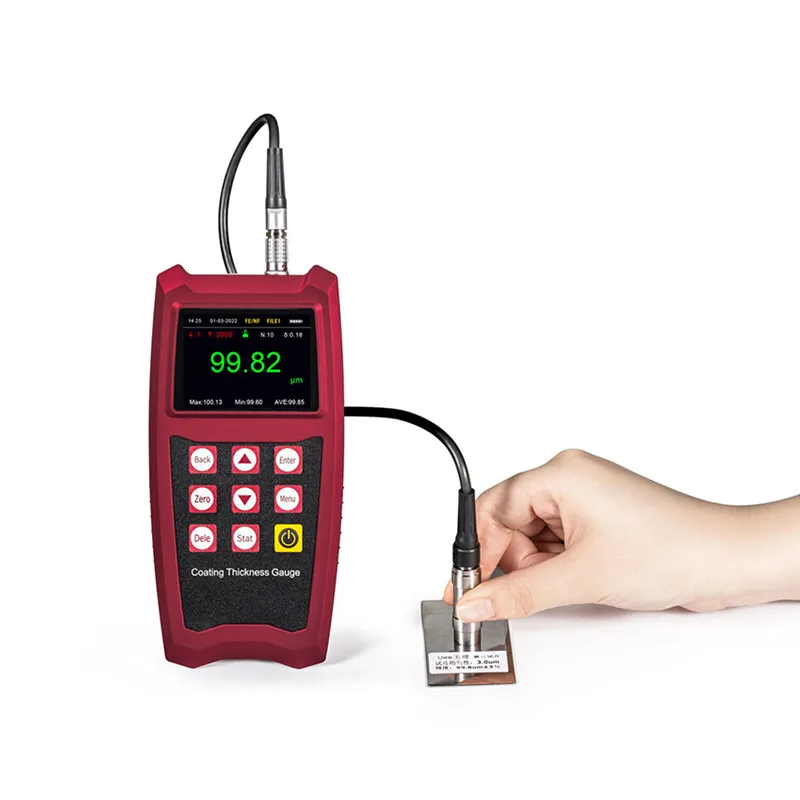

Magnetic Induction Gauges: These gauges are designed to measure the thickness of non - magnetic coatings on magnetic substrates such as iron, steel, and nickel. They work based on the principle that the magnetic field generated by the gauge changes when it approaches a magnetic surface through a non - magnetic coating. The degree of the change in the magnetic field is proportional to the thickness of the coating. For instance, in the Galvanized Layer Thickness Measurement, magnetic induction gauges are commonly used because the zinc coating (non - magnetic) on a steel substrate (magnetic) can be accurately measured with this type of gauge.
Eddy - Current Gauges: Eddy - current gauges are used for measuring non - conductive coatings on non - magnetic metal substrates like aluminum, copper, and brass. When an alternating magnetic field is applied to the non - magnetic metal substrate, eddy currents are induced in the substrate. The presence of a non - conductive coating affects the eddy currents, and the gauge measures this change to determine the coating thickness. This is particularly useful in applications such as Paint Layer Thickness Measurement on aluminum parts.
Consider the Measurement Range
The measurement range of a coating thickness gauge is an important factor. You need to know the typical range of coating thicknesses in your application. Some gauges may have a limited range, for example, from 0 to 500 microns, while others can measure up to several millimeters. If you are dealing with thin paint coatings, a gauge with a lower maximum measurement range may be sufficient and more cost - effective. However, if you are involved in heavy - duty industrial applications where coatings can be much thicker, such as in certain protective coatings for large machinery, you will need a gauge with a wider measurement range.
Accuracy Requirements
Accuracy is of utmost importance in coating thickness measurement. Different applications may have different accuracy requirements. In industries where strict quality control is necessary, such as the aerospace and automotive industries, a high - accuracy gauge is essential. Even a small deviation in coating thickness can affect the performance and durability of the product. For example, in automotive paint applications, an inaccurate measurement could lead to uneven paint appearance or premature corrosion. Before purchasing a gauge, determine the acceptable level of measurement error. A high - end coating thickness gauge can offer an accuracy of up to ± 1% of the measured value, while more budget - friendly options may have an accuracy of around ± 5%.
Ease of Use
The ease of use of a coating thickness gauge can significantly impact productivity, especially in environments where multiple measurements need to be taken quickly. Look for a gauge with an intuitive user interface. A large, easy - to - read display is beneficial, especially in low - light conditions. The gauge should also have simple operation buttons or touchscreens for functions such as zero - setting, data storage, and switching between measurement modes. Additionally, consider the size and weight of the gauge. A lightweight and compact gauge is more convenient to handle, especially when measuring in hard - to - reach areas.
Portability
Portability is another factor to consider, especially if you need to carry out measurements on - site. Portable coating thickness gauges are battery - operated and can be easily transported from one location to another. They are ideal for field inspections, such as in construction sites or on - site quality control of large structures. Some portable gauges also come with a carrying case for added protection during transportation.
Data Storage and Connectivity
In modern quality control, the ability to store and analyze measurement data is crucial. Many coating thickness gauges now come with built - in data storage capabilities, allowing you to save multiple measurement results. This data can then be transferred to a computer for further analysis, reporting, and record - keeping. Look for gauges that support common data transfer methods such as USB or Bluetooth. This enables seamless integration with your existing data management systems.
Durability
Coating thickness gauges are often used in harsh industrial environments, so durability is a key consideration. The gauge should be able to withstand dust, moisture, and mechanical shocks. Look for gauges with a rugged housing made of materials such as high - impact plastic or metal. Some gauges are also rated for specific environmental conditions, such as IP (Ingress Protection) ratings, which indicate the level of protection against dust and water.
Cost
Cost is always a factor in any purchasing decision. While it may be tempting to choose the cheapest option available, it is important to consider the long - term value. A high - quality coating thickness gauge may have a higher upfront cost but can save you money in the long run by providing accurate and reliable measurements, reducing the need for rework and ensuring product quality. Compare the features and performance of different gauges within your budget to find the best value for your money.
Application - Specific Considerations
Depending on your specific application, there may be additional factors to consider. For example, if you are in the paint industry, you may be interested in a gauge that can accurately measure Paint Coating Thickness on various substrates, including wood, plastic, and metal. If you are involved in the manufacturing of electronic components, you may need a gauge that can measure very thin coatings with high precision.
In conclusion, choosing a suitable coating thickness gauge requires careful consideration of multiple factors, including the type of gauge, measurement range, accuracy, ease of use, portability, data storage, durability, cost, and application - specific requirements. As a coating thickness gauge supplier, I am committed to helping you find the right solution for your needs. If you have any questions or need further assistance in selecting a coating thickness gauge, please feel free to contact us to discuss your requirements and start the procurement process.
References
- ASTM International Standards on Coating Thickness Measurement
- ISO Standards related to Coating Thickness Testing
- Technical manuals of various coating thickness gauge manufacturers