

What is the calibration frequency for a rockwell hardness tester?
Hey there! As a supplier of rockwell hardness testers, I often get asked about the calibration frequency for these essential testing tools. In this blog post, I'm gonna break down what calibration frequency is, why it's important, and how to determine the right calibration schedule for your rockwell hardness tester.
First off, let's talk about what calibration is. Calibration is the process of comparing a measurement instrument, like a rockwell hardness tester, against a known standard to ensure its accuracy. Over time, factors like wear and tear, environmental conditions, and regular use can cause a hardness tester to lose its accuracy. That's where calibration comes in - it helps to keep your tester in tip - top shape and ensures that the hardness measurements it provides are reliable.
So, why is calibration frequency so crucial? Well, inaccurate hardness measurements can lead to a whole host of problems. In manufacturing, for example, if you're relying on a hardness tester to check the quality of your products and the tester isn't accurate, you might end up with defective products. This could result in costly recalls, damage to your brand's reputation, and potential safety hazards for end - users.

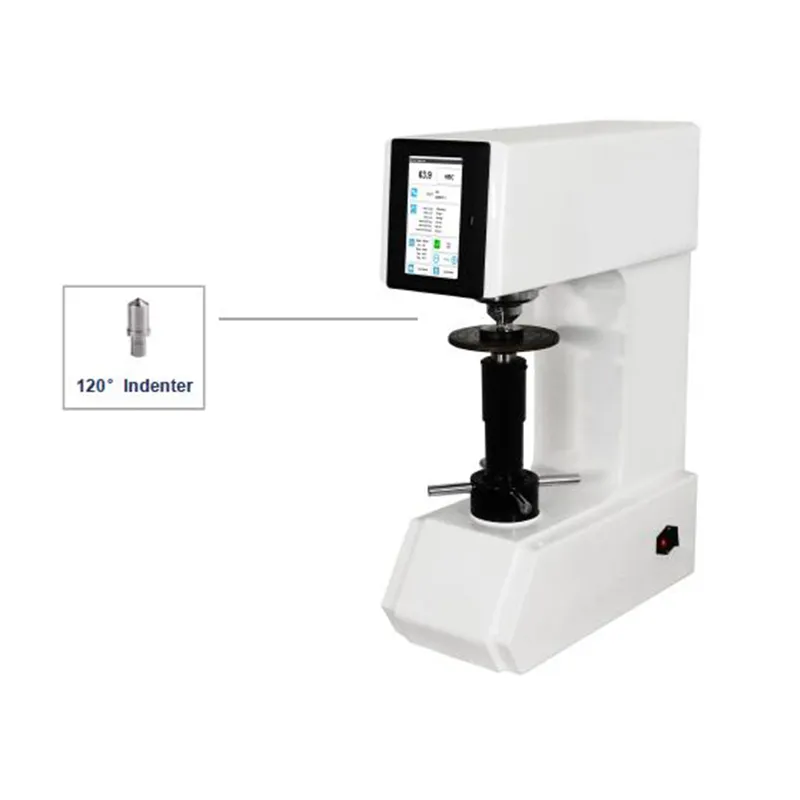
Now, the big question: what is the calibration frequency for a rockwell hardness tester? There's no one - size - fits - all answer to this question. The calibration frequency can vary depending on several factors.
One of the main factors is how often the tester is used. If you're using your rockwell hardness tester on a daily basis in a high - volume production environment, you'll likely need to calibrate it more frequently than if it's used only occasionally. For instance, in a busy automotive manufacturing plant where hundreds of parts are tested every day, the tester might need to be calibrated weekly or even daily in some cases. On the other hand, a small machine shop that only uses the tester a few times a month might be able to get away with calibrating it quarterly or semi - annually.
The environment in which the tester is used also plays a significant role. Harsh environments, such as those with high levels of dust, humidity, or extreme temperatures, can cause more rapid wear and tear on the tester and affect its accuracy. In these conditions, you'll probably need to calibrate the tester more often. For example, a mine where the tester is exposed to dust and caustic substances might require monthly calibration to ensure accurate results.
Another factor to consider is the level of precision required in your hardness testing. If you're working in an industry where very precise hardness measurements are critical, like aerospace or medical device manufacturing, you'll need to calibrate your tester more frequently. In these industries, even a small deviation in hardness measurement can have serious consequences. So, a calibration every few weeks or even days might be necessary.
Let's look at some general guidelines for calibration frequency based on these factors:
- Light use (less than once a week): If your rockwell hardness tester is used sporadically, perhaps in a research lab or a small - scale workshop, an annual calibration might be sufficient. However, it's still a good idea to perform some basic checks, like visual inspections for any damage or signs of wear, before each use.
- Moderate use (once or twice a week): For moderate - use scenarios, such as in a medium - sized manufacturing facility where a few parts are tested regularly, a semi - annual calibration is often recommended. This helps to catch any small accuracy drifts before they become major issues.
- Heavy use (multiple times a day): In high - volume production settings, like large - scale forging plants or steel mills, weekly or even daily calibration might be necessary. These environments put a lot of stress on the tester, and regular calibration ensures that the hardness measurements are consistent and reliable.
At our company, we offer a range of rockwell hardness testers to suit different needs. We have the Closed-loop System Rockwell Hardness Tester, which features a closed - loop system for enhanced accuracy and stability. This tester is great for applications where high precision is required.
We also have the Dial Display Manual Rockwell Durometer, a more budget - friendly option that's easy to use and suitable for small - scale operations. And for those who need to test both regular and superficial hardness, our Rockwell and Superficial Rockwell Durometer is the perfect choice.
When it comes to calibration, we recommend using a certified calibration service. This ensures that the calibration is done correctly and that the tester is traceable to national or international standards. Many calibration services offer on - site calibration, which is convenient if you can't afford to take your tester out of production for an extended period.
In addition to regular calibration, proper maintenance of your rockwell hardness tester is also essential. This includes keeping the tester clean, lubricating moving parts as recommended by the manufacturer, and storing it in a suitable environment when not in use. Regular maintenance can help to extend the life of your tester and reduce the need for frequent calibration.
If you're unsure about the calibration frequency for your rockwell hardness tester or need help choosing the right tester for your application, don't hesitate to reach out to us. We have a team of experts who can provide you with personalized advice and guidance. Whether you're just starting out in hardness testing or looking to upgrade your existing equipment, we're here to support you.
We understand that finding the right rockwell hardness tester and establishing the correct calibration schedule can be a bit overwhelming. But with our expertise and high - quality products, we make it easy for you. So, if you're in the market for a new hardness tester or want to ensure that your current one is calibrated correctly, get in touch with us. Let's start a conversation and find the best solution for your hardness testing needs.
References
- ASTM International. (20XX). Standard Test Methods for Rockwell Hardness of Metallic Materials.
- ISO Standards. (20XX). ISO [Specific ISO number] - Rockwell hardness testing.