

Hey there! As a supplier of surface waviness testers, I often get asked about the measurement speed of these nifty devices. So, let's dive right in and chat about what the measurement speed of a surface waviness tester really means.
First off, why does measurement speed matter? Well, in a manufacturing environment, time is money. The faster a surface waviness tester can get accurate results, the more parts can be inspected in a given period. This boosts productivity and helps keep the production line moving smoothly. For quality control teams, quick measurement speeds mean they can catch any surface irregularities early on, preventing defective products from reaching the market.
Now, what exactly determines the measurement speed of a surface waviness tester? There are a few key factors. One of the main ones is the technology used in the tester. Some testers use mechanical stylus-based systems. These work by physically tracing the surface of the part being tested. The speed at which the stylus can move across the surface while still accurately measuring the waviness affects the overall measurement speed. Generally, modern stylus-based testers have come a long way in terms of speed, but there are limits due to the physical contact with the surface.
On the other hand, non - contact testers, such as those using optical or laser technology, often have the potential for much higher measurement speeds. These testers can scan the surface from a distance without physically touching it. This allows them to cover larger areas in a shorter amount of time. For example, a laser scanner can quickly capture the surface profile, and the built - in software can then analyze the data to determine the waviness.
Another factor that impacts measurement speed is the complexity of the surface being tested. If the surface has a lot of intricate details or complex geometries, the tester may need to take more measurements at different points to accurately assess the waviness. This will naturally slow down the measurement process. In contrast, a simple, flat surface can be measured much more quickly.
The sampling rate of the tester also plays a role. A higher sampling rate means that the tester takes more measurements per unit of time. While this can lead to more accurate results, it also increases the time required for measurement. So, there's a bit of a trade - off between accuracy and speed when it comes to sampling rate.
Let's talk about some real - world applications. In the automotive industry, surface waviness testers are used to inspect engine components, such as cylinder heads and pistons. These parts need to have a very precise surface finish to ensure proper functioning. A fast - measuring surface waviness tester can quickly check a large number of these components on the production line, ensuring that they meet the strict quality standards.
In the aerospace industry, where safety is of utmost importance, surface waviness testing is crucial for parts like turbine blades. These parts operate under extreme conditions, and any surface irregularities can lead to performance issues or even catastrophic failures. A high - speed surface waviness tester can help in quickly validating the quality of these critical components.
Now, if you're in the market for a surface waviness tester, you might be interested in some of the products we offer. We have a Waviness and Roguhness Tester Measuring Range 1000μm which is known for its high - accuracy measurements and decent measurement speed. It's suitable for a wide range of applications, from small - scale laboratory testing to large - scale industrial production.
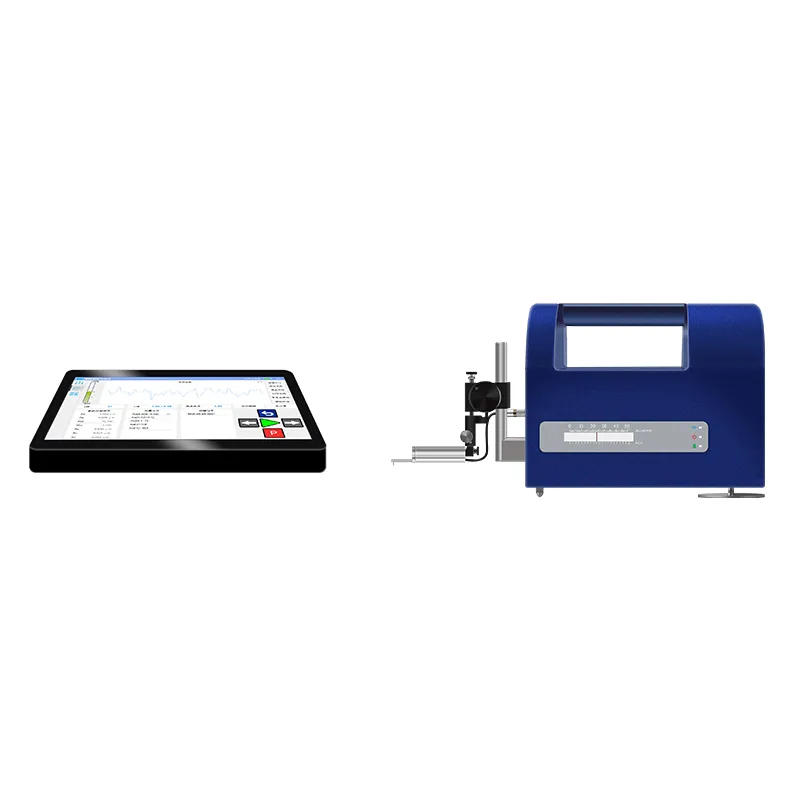
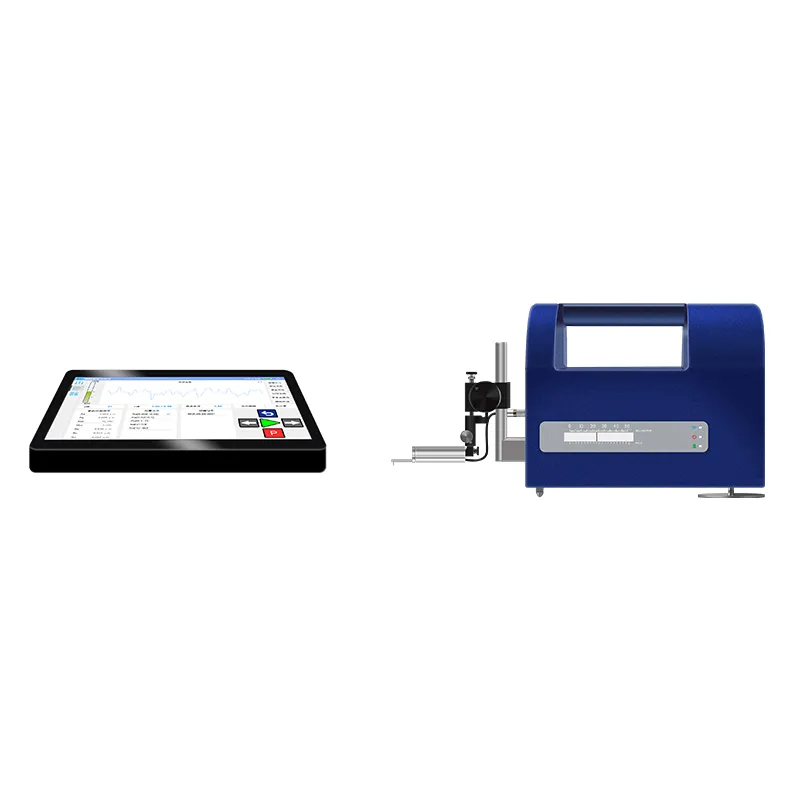
Another option is our Wired Connection Roguhness Tester. This tester offers a reliable wired connection, which ensures stable data transfer during the measurement process. It also has a user - friendly interface, making it easy for operators to use, and it can provide relatively fast measurement results.
When choosing a surface waviness tester, it's important to consider your specific needs. If you're in a high - volume production environment, you'll likely want a tester with a high measurement speed. But if you're doing more in - depth research or need extremely accurate results, you might be willing to sacrifice a bit of speed for better precision.
We understand that every customer has unique requirements, and that's why we're here to help. Whether you need advice on which tester is right for you or have questions about the measurement speed and how it relates to your application, our team of experts is ready to assist.
If you're interested in learning more about our surface waviness testers or want to discuss a potential purchase, don't hesitate to reach out. We're always happy to have a chat and see how we can meet your surface measurement needs.
References
- "Surface Metrology: Principles and Applications" by David J. Whitehouse
- Industry reports on surface measurement technology and its applications in automotive and aerospace sectors