

As a supplier of universal hardness testers, I often encounter questions from customers about the capabilities of our products. One of the most common queries is whether a universal hardness tester can effectively test the hardness of metal alloys. In this blog post, I'll delve into this topic, exploring the science behind hardness testing, the characteristics of metal alloys, and how our universal hardness testers can meet the challenges of testing these complex materials.
Understanding Hardness Testing
Hardness is a fundamental property of materials, defined as the resistance to permanent deformation, typically by indentation. It provides valuable insights into a material's strength, wear resistance, and machinability. There are several methods for measuring hardness, each with its own advantages and limitations. The most widely used hardness testing methods include the Brinell, Vickers, and Rockwell tests.
The Brinell test involves pressing a hard, spherical indenter into the material under a specific load for a set period. The diameter of the resulting indentation is measured, and the Brinell hardness number (BHN) is calculated based on the load and the surface area of the indentation. The Vickers test uses a square-based pyramid indenter, and the Vickers hardness number (HV) is determined by measuring the diagonal length of the indentation. The Rockwell test measures the depth of penetration of an indenter under a minor load followed by a major load, and the Rockwell hardness number is read directly from the tester.
Characteristics of Metal Alloys
Metal alloys are mixtures of two or more metals, or a metal and a non-metal, designed to enhance specific properties such as strength, corrosion resistance, or heat resistance. Alloys can have complex microstructures, consisting of different phases, grains, and precipitates, which can significantly affect their hardness. The hardness of a metal alloy depends on several factors, including the composition of the alloy, the heat treatment process, and the presence of any impurities or defects.
For example, steel is an alloy of iron and carbon, with small amounts of other elements such as manganese, silicon, and chromium. The hardness of steel can vary widely depending on its carbon content and the heat treatment it has undergone. Low-carbon steels are relatively soft and ductile, while high-carbon steels are harder and more brittle. Heat treatment processes such as quenching and tempering can further modify the hardness and other properties of steel.
Can a Universal Hardness Tester Test the Hardness of Metal Alloys?
The answer is yes. A universal hardness tester is designed to perform multiple hardness tests, including Brinell, Vickers, and Rockwell, using a single instrument. This versatility makes it an ideal tool for testing the hardness of metal alloys, as it allows for the selection of the most appropriate test method based on the specific characteristics of the alloy.
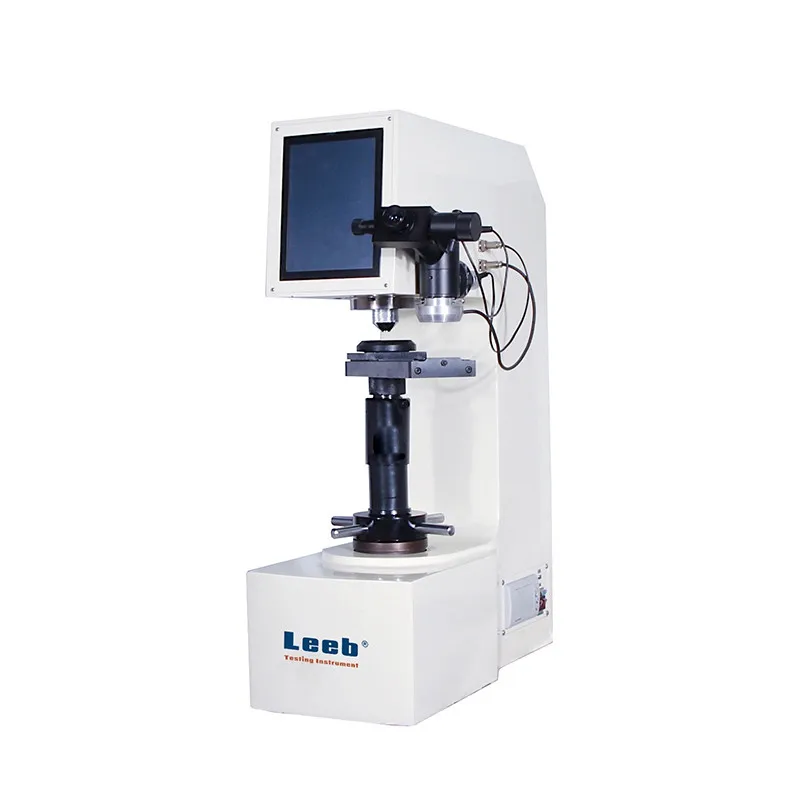
One of the key advantages of a universal hardness tester is its ability to handle a wide range of materials and hardness levels. Metal alloys can have hardness values that vary from relatively soft to extremely hard, and a universal hardness tester can accommodate this variability. For example, the Digital Touch Screen Universal Hardness Tester offers a wide range of test forces and indenter options, allowing for accurate and reliable hardness testing of various metal alloys.
Another advantage of a universal hardness tester is its precision and accuracy. These testers are equipped with advanced sensors and measurement systems that ensure consistent and repeatable results. This is particularly important when testing metal alloys, as small variations in hardness can have a significant impact on their performance and reliability. The Brinell Vickers Rockwell Hardness Tester is designed to provide high-precision hardness measurements, with a resolution of up to 0.1 hardness units.
In addition to its versatility and precision, a universal hardness tester also offers ease of use and efficiency. Modern universal hardness testers are often equipped with digital displays and user-friendly interfaces, making them easy to operate even for non-experts. They also have the ability to store and analyze test results, which can be useful for quality control and research purposes.
Considerations for Testing Metal Alloys
While a universal hardness tester can effectively test the hardness of metal alloys, there are some considerations to keep in mind to ensure accurate and reliable results.
First, it's important to select the appropriate test method and indenter based on the hardness and thickness of the alloy. For example, the Brinell test is typically used for testing relatively soft and thick materials, while the Vickers test is more suitable for testing thin and hard materials. The Rockwell test is commonly used for testing medium-hardness materials.

Second, the surface preparation of the alloy sample is crucial for accurate hardness testing. The surface should be smooth, flat, and free of any defects or contaminants. Any roughness or irregularities on the surface can affect the size and shape of the indentation, leading to inaccurate hardness measurements.
Third, the test conditions, such as the test force, loading time, and indentation spacing, should be carefully controlled. These parameters can have a significant impact on the hardness measurement, and they should be selected based on the specific requirements of the alloy and the test method.
Conclusion
In conclusion, a universal hardness tester is a powerful and versatile tool for testing the hardness of metal alloys. Its ability to perform multiple hardness tests, handle a wide range of materials and hardness levels, and provide precise and accurate results makes it an essential instrument for quality control, research, and development in the metalworking industry.
If you're in the market for a universal hardness tester to test the hardness of metal alloys, I encourage you to explore our range of products. Our Digital Touch Screen Universal Hardness Tester and Brinell Vickers Rockwell Hardness Tester offer advanced features and high performance to meet your specific needs. Contact us today to discuss your requirements and explore how our universal hardness testers can help you achieve accurate and reliable hardness testing results.
References
- Callister, W. D., & Rethwisch, D. G. (2011). Materials Science and Engineering: An Introduction. Wiley.
- ASTM International. (2018). Standard Test Methods for Rockwell Hardness of Metallic Materials. ASTM E18-18.
- ASTM International. (2019). Standard Test Methods for Brinell Hardness of Metallic Materials. ASTM E10-19.
- ASTM International. (2018). Standard Test Methods for Vickers Hardness of Metallic Materials. ASTM E92-18.